Hard hardwood, creolization, deviltree, and pissed-off voyageurs
Ah, some deviltree! Just in time for Halloweeeen! 🙂
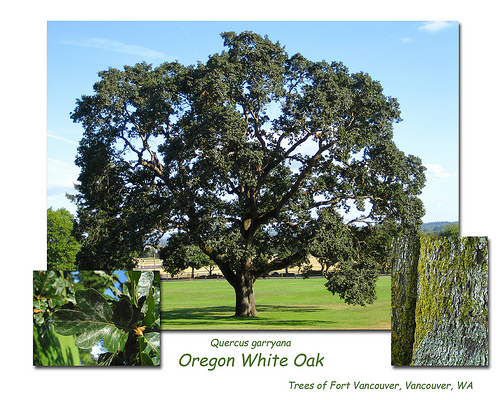
q̓ə́l-q̓əl stík:
Literally ‘hard-hard wood’. Finding this in C. Snow’s field notes with the meaning ‘oak’, I checked his sometimes interesting CJ phonetics against the Grand Ronde dictionary.
Surprising to me, it’s not there.
The reason it’s surprising, and the reason it’s cool to find outside of Shawash-Ili’i, is the full-root reduplication.
My perception is that that RDUP is unique to creolized Jargon. Which we typically identify with Grand Ronde.
But there are multiple testimonies as early as about 1820, to the effect that kids were growing up talking Jargon (i.e. making it a mother-tongue, i.e. creolizing it) on the lower Columbia River.
Kull-kull stick for ‘oak’ is also in Swan 1857, from Shoalwater Bay! You know: way down by the mouth of the Columbia.
Hm.
*(As opposed to onomatopoeic reduplications, e.g. the similar-sounding koko ‘knock’ which fits a pattern of Chinookan forms, which get inherited in all flavors of Jargon…
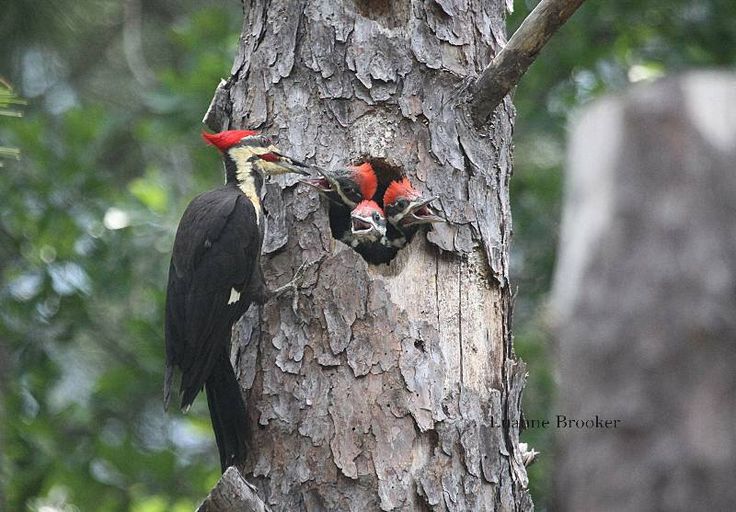
…Going on a harmless George Carlin tangent, did you ever notice how weird koko stick [from Lionnet 1853] sounds for ‘woodpecker’? Because prior to the CTGR revitalization, we had extremely few compounds of Verb+Noun Object like this. It’s clearly a calque on French ‘pic-bois’.
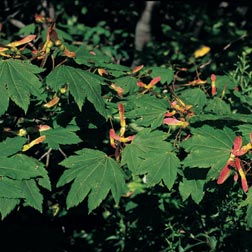
On the other hand, Lionnet’s kooo [sic] stick for ‘bois-diable’ = ‘vine maple’, I can see this being a typo for a well-formed Adjective+Noun compound *koco stick, ‘the knocking tree’. Because like Alan Hartley pointed out to Henry Zenk on the CHINOOK listserv once, vine maples had the habit of knocking pissed-off voyageur trailblazers in the face.)

“Pic-bois” is not Standard French, but it may be from a Canadian variety. Standard words are “pic” and (for a green bird) “pivert” (from earlier “pic-vert”).
LikeLike
Neat observation! So this odd-looking Chinuk Wawa term may be rare evidence of an obscure Canadian term. I’d love to invest in a good dictionary of Canadianisms in French. (None of these is in McDermott’s “A Glossary of Mississippi Valley French”.) Recommendations would be gratefully welcomed 🙂
LikeLike
A propos of our subsequent conversation about “tobak” and French “tabac” — would this “pic” be [pik] or would it be [pi]? Does your answer depend on whether we’re talking about Canadian French?
LikeLike
Interesting, not least because I don’t find it in the GR dictionary either but I DO find q’el-q’el compounds in the pre-dictionary GR reference I have. My draft dictionary is somewhere in a box still….
LikeLike
Yup, I see q̓ə́l-q̓əl in another GR reference resource, attributed as non-GR regional Jargon to “md”, Modeste Demers.
LikeLike
Addendum, 10/28/2015: T.W. Prosch’s 1888 [1912] manuscript dictionary has “koko kullakulla” for woodpecker. Which suggests both the vitality of “koko” and the authenticity of his Puget Sound pioneer CJ.
LikeLike
Pingback: I’m cuckoo for ko-ko! | Chinook Jargon
Pingback: Some needed followup on ‘knock’ | Chinook Jargon
I am sure I have heard it used in Michif, which means it goes back to Métis French, som pic-de-bois. I checked the Laverdure & Allard dictionary, and here it is: woodpecker- en pik di bwaw; The woodpecker is pecking at the tree. Li pik di bwaw pakwatakwayw lawbr.
LikeLiked by 1 person
Pingback: McArthur’s “Oregon Geographic Names” (part 3 of 8) | Chinook Jargon
Better late than never: there is nothing obscure/archaic whatsoever about “picbois”, a word which is alive and kicking in Quebec (and indeed the title of a well-known Quebec song from the seventies). The Michif form, pic-de-bois, on the other hand, definitely looks odd, indeed bizarre.
Here is a link to the song in question, with the words: it is in VERY colloquial Montreal French, please note (I could not find any version with English subtitles, I’m afraid!):
LikeLiked by 1 person
haiyoo masi Etienne! The link didn’t come through, unfortunately 😦
Is it “Le picbois” by Beau Dommage?
“À l’heure où les gens s’éveillent
À l’heure des poules, l’heure des foules
La rue était pleine de soleil
J’ai pris le train d’7 heures et 20
Descendu dans un village
Sentait l’bois, sentait l’sapin
J’entends l’picbois dans son arbre
J’me sens loin, mais j’me sens ben
Laisse-moi pas revenir en ville
Tape-moi sur ma tête de bois
Picbois, laisse-moi pas tranquille
Picbois, j’veux plus m’en aller
Descendu dans un village
Sentait l’bois, sentait l’sapin
J’suis tombé comme un orage
En plein été des Indiens
J’ai rien amené avec moi
Juste mon billet de retour
J’ai eu l’goût d’le déchirer
Le picbois m’a joué un tour
Laisse-moi pas revenir en ville
Tape-moi sur ma tête de bois
Picbois, laisse-moi pas tranquille
Picbois, j’veux plus m’en aller
Quand t’es né sur du béton
Tu sais pas les noms d’oiseaux
J’les connais pas par leurs noms
J’vais m’asseoir sans dire un mot
À l’heure où les gens s’éveillent
J’suis monté jusque dans l’bois
Pour me laver les oreilles
En écoutant le picbois
Laisse-moi pas revenir en ville
Tape-moi sur ma tête de bois
Picbois, laisse-moi pas tranquille
Picbois, j’veux plus m’en aller
Laisse-moi pas revenir en ville
Tape-moi sur ma tête de bois
Picbois, laisse-moi pas tranquille
Picbois, j’veux plus m’en aller”
LikeLike
It is indeed! And now is as good a time as any to mention that the songs of “Beau dommage”, which use very colloquial Quebec (more specifically, Montreal) French, would be an excellent way to grow familiar with the main distinctive traits (phonological and morphological especially) of Quebec French.
In fact, a song like “Le picbois” is definitely one I could imagine that the fur-trading voyageurs (well, if any could travel forward and then back in time) would have liked, appreciated, and come to sing while canoeing…
LikeLiked by 1 person