1858, Oregon and BC: Dictionaries are a humbug! Learn Jargon from the “abergoines”!
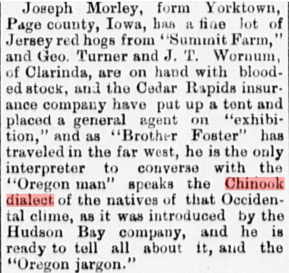
Here’s one of the earliest mentions of Chinook Jargon being in use in British Columbia…
Here’s one of the earliest mentions of Chinook Jargon being in use in British Columbia…
I infer that “Brother Foster” — who was he? — is himself the “Oregon Man”, so I’ve added speculative punctuation here.
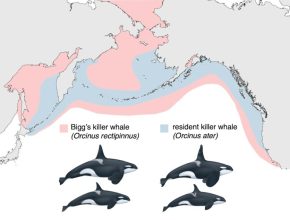
I was interviewed for this excellent piece of science reporting from the Puget Sound Institute:
Song #7 from Myron Eells’s little book, “Hymns in the Chinook Jargon Language“, 2nd (expanded!) edition (Portland, OR: David Steel, 1889):
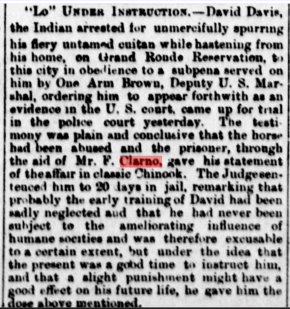
Early days on the Grand Ronde Indian Reservation, with a Chinuk Wawa quotation from a Native man.
I hadn’t heard of a Spokan(e) tribal elder called Sam Angdo, so it’s a pleasure to learn of him & his reliance on Chinook Jargon!
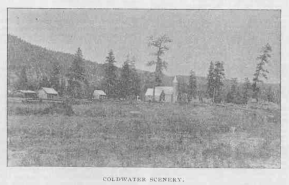
Here’s a contemporary photo of Coldwater, a Native village in the Nicola region of south-central British Columbia that was home to the first Indigenous “Chinuk Pipa” writer.
Yes, it’s a racist headline.
“César Cascabel” is an 1890 novel by the famous Jules Verne. It’s one of his less well known works, in the English-speaking world.
The 20th pair of pages in this precious document again brings us plenty of stuff worth knowing about Chinook Jargon.