Respected elder Dr Louis Miranda tells you what Northern Chinook Jargon is like (Part 1: tl’ap)
From the Youtube video “Louis Miranda: Squamish elder teaches Chinook Jargon“.
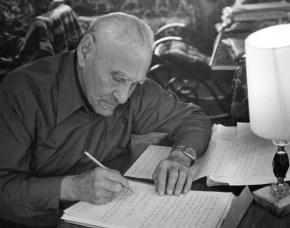
From the Youtube video “Louis Miranda: Squamish elder teaches Chinook Jargon“.
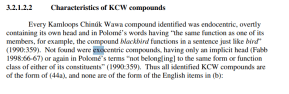
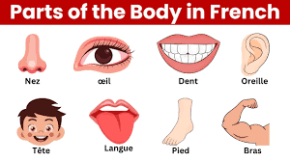
Is your head outside of your body? Talkin’ about exocentric compounds!
Not my idea. Thanks to Louis-Napoléon St Onge.
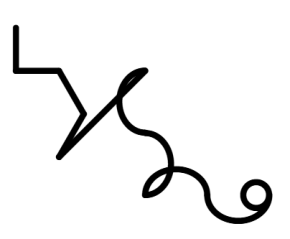
[Editing 02/15 to give it away: these are all 10 of the Chinook-Peipa number symbols, from 1 to 0, in order! Dave Robertson] It’s extra-hard to figure out because there are a couple… Continue reading
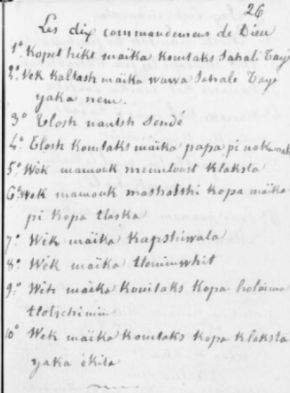
Yes, more good stuff for us to learn from. Here we have some very Catholic stuff.
Continuing our chronicle of “whole wheat” and Chinook Jargon as a Métis language:
The big pattern that I like to teach to folks is that —
Naika wawa masi kopa Paisley pi Mokwst Alex, for reminding me of a great book by a great anthropological linguist!
I do a good deal of research work on Father JMR Le Jeune’s notebooks.