Kamloops Wawa humor: chamberpots (Part 1 of 2)
Sometimes cultural contact is funny.
Sometimes cultural contact is funny.
The Central and Southern Chinuk Wawa word for a ‘yellow / dun / buckskin-colored’ horse is likʰrem.
Riddle me (with) this…
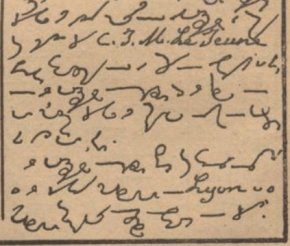
In the 1893 book “La sténographie en France“, which is mostly in French shorthand, the inventor thereof, Émile Duployé, reports years of contact with Jean-Marie-Raphaël Le Jeune, who is famous to us as… Continue reading
I’m not intending this to be the last word on the matter. I’ll be delighted if a Linguistics major steals this idea and does up a whole study on it!
‘Spotted, speckled’, a horse word in Chinuk Wawa, doesn’t come from the French word for the bird ‘quail’.
And, by implication, should we take it as a Chinuk Wawa word?
Cross-referencing.
Ah, the story of lo and la and dueling English dialects!
Much as with the Stevens Treaties in the US, back-translation into Northern Chinook Jargon awaits this important BC document.