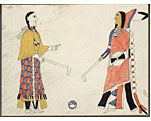
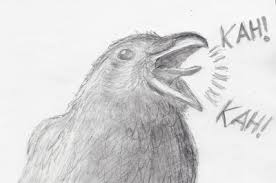
Don’t wail like Coyote, weep like a whiteman
The priest tries to kill the Indian to save the person, or at least their soul…
1813 would be early evidence for extensive Chinook Jargon use. On this point, I’m in agreement with Robert Francis Jones, the modern editor of “Annals of Astoria: The Headquarters Log of the Pacific… Continue reading
It’s called “A-B Testing” in modern marketing. Can you spot the differences? Which version got a better response?
I’ll merely excerpt this lengthy early-frontier era Eastern Oregon anecdote from a late-frontier era California newspaper. OREGON WILDS. Lost in a Driving Snowstorm on a Desolate Prairie. BLIND SEARCH FOR A TRAIL. Frightful Fall… Continue reading
This little new discovery is one of the earliest substantial Chinook Jargon texts ever published. It’s doggerel, self-proclaimed. The eye-dialect spellings (Costigan’s Irish accent?) in the English parts are a giveaway about that… Continue reading
(Back to: Part 1. Part 2. Part 3. Part 4. Part 5. Part 6.) <Ch. 7. The Magi.> Tlun taii shako nanish ShK. Three chiefs visit Jesus. <1.> Wik lili pi… Continue reading
(View & hear Dale McCreery reading parts 1-6 aloud!) (Back to: Part 1. Part 2. Part 3. Part 4. Part 5.) Wach man kopa lamuto. The guards over the sheep. … Continue reading
(View & hear Dale McCreery reading parts 1-6 aloud!) (Back to: Part 1. Part 2. Part 3. Part 4.) ShK chako tanas. Jesus is born. … Continue reading
(View & hear Dale McCreery reading parts 1-6 aloud!) (Back to: Part 1. Part 2. Part 3.) the Baptist.> SShB shako tanas. John the Baptist is born. Iaka k’o iaka son pus There… Continue reading
(View & hear Dale McCreery reading parts 1-6 aloud!) (Back to: Part 1. Part 2.) Mari klatwa nanish iaka kosin Ilisabit. Mary goes to visit her cousin Elizabeth. Lisash kilapai… Continue reading