Not ‘slaves’ but ‘commoners’: Why a word stopped being used in Chinuk Wawa
It’s because there stopped being a stratified society where this word was being used. Did it also have to do with Métis people?
This word being a now-obsolete early Chinook Jargon word spelled (in the Demers, Blanchet, St Onge dictionary in 1871) as mishtimish / chemishtimish / michimish. They define it as ‘slave — insulting term‘.
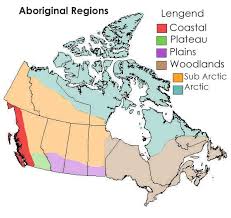
Image credit: Being A Canadian Alien
In St Onge’s private, handwritten dictionary around the same time, he also spelled it michimis / michmas / michimas / michima. His definitions there are similar, including ‘bondage, in’; ‘serf’ (he loved big English words).
We know that this word arrived at the Columbia River via the supposed “Nootka Jargon” of Euro-American maritime traders, around 1794. It’s from one or more of the Nuučaan̓uɬ (Southern Wakashan, previously called “Nootkan”), languages. Have a peek at these forms of it there:
- t̓ukʷaaʔatḥ (Barkley West): musčum ‘commoner’
- c̕išaaʔatḥ: masčim ‘common person; commoner; people’
- Makah: masčim ‘commoner’
So you can see that this word never meant a ‘slave’ in the original language. (There are separate words for that in Nuuchahnulth.) It was misunderstood, or half-understood, by non-Indigenous visitors.
When those Drifters brought this word to Chinook land, where there also were Indigenous slaves, it seems clear they used it in relation to those people as well as to others who weren’t members of the Indigenous nobility. Confusing common people (who would be thought of as locals) and slaves (who were foreigners) for each other may well have been an insult to both.
It’s a fair bet that mishtimish and its variants became ever less useful words in the Jargon, whereas the Chinookan-sourced iláytʰix ‘slave’ and tílixam ‘the people’ both were unambiguous in this regard.
Bonus fact:
We linguists, to the extent that we’ve published comments about this Jargon word, have suspected that its final syllable might preserve a trace of pidginized Nuučaan̓uɬ usage by speakers of Spanish, who were the first non-Indigenous people to spend much time around the west coast of Vancouver Island, BC. If the -ish / -is / -as is from a Spanish noun plural, that would make this word one of the incredibly few Spanish influences in Chinuk Wawa. However, it may just be a Nuuchahnulth diminutivizing suffix.
Bonus bonus fact:
In the original Nuučaan̓uɬ, there was a consonant sequent /sč/; that is, “s” plus “ch”. Demers-Blanchet-St Onge have this mutated in Chinuk Wawa to a “sh” plus “t”, and the even more mutated reverse of that (“t” plus “sh” = “ch”). St Onge’s manuscript dictionary has pretty much settled on the much-changed “ch” pronunciation. In that same document, we find similar metathesis, switching consonants’ order, in his entry mestin for ‘medicine’; compare the more etymologically faithful lametsin variant that he also documents. And you may have noticed a number of the old-school Jargon dictionaries showing the word for ‘9’ as either kwaits or kwaist. Fact is, there’s been a noticeable amount of metathesis in the history of Chinuk Wawa, and I figure it has to do with speakers of various languages feeling more comfortable with certain pronunciations than with others.
Bonus bonus bonus fact:
The variant with che- looks sort of like it went through a K’alapuyan language filter. That family of languages has a locative prefix cha-. However…I think ‘at the slave(s)’ might be a nonsense form. And K’alapuyan languages had very little discernible structural influence on the formation of Chinuk Wawa.

Hey, Dave, this is an important observation. Some of the early pale-faced visitors to Nootka Sound were aware of the existence of slaves (sg. quuł, pl. qʷaquuł), like the Franciscan Lorenzo Sociés (1789: < cols >), US trader Joseph Ingraham (1789: < kolthz >) and the famous John Jewitt in his 1815 “Adventures” (< kak-koelth >, pl.). Most sources, however, only mention “commoners” (sg. masčim across the table at that time, pl. probably maay̓aasčim). The -ish “suffix” is most certainly to blame on the Spaniards, who wrote < meschimes > most of the time. There are three possibilities of what that stands for, the first two of which they may have heard: (1) masčimʔis “little commoner” (2) Masčimʔiš. “S/He is a commoner.”The most likely one, however, is this: (3) masčim + Spanish plural -(e)s
I say (3), because that’s what they liked doing with collective nouns. It is instructive to compare this to another CW word of NCN origin: taayii “eldest sibling ~ highest-ranking noble”, which the Spanish used as < tais > in the singular and < taises > in the plural. Now, < tais > is probably from taayii with declarative 3s-clitic -ʔiš: Taayiiʔiš = “He is the highest ranking one.” (Spanish had lost the /š/-sound by that time and both /s/ and /š/ were conflated into < s >.) The singular being < tais >, they had no choice but to pluralize it as < taises >. In the case, < meschimes > come from possibilities (1) or (2), they would have written *meschimeses, for which I know of no occurrence.
Cheers,Henry
LikeLike
My compliments in return, Henry — and I hope I’ve succeeded in editing your comment so the angled brackets stop making NCN words disappear. Really fascinating to me to see someone who’s well-informed evaluating the earliest written documents of the language. Hayu masi!
LikeLike