Saying “potlatch” in Chinook Jargon isn’t so easy!
Welcome back to the Chinook Jargon blog!
I took a hiatus to work on some grants, and I’ve missed you.
The other day on Facebook, I gave a heads-up that this site will soon invite you to contribute funds, so that I’ll be able to post every day without interruption.
Watch for that!
Thanks for reading!
Now…
Established readers o’mine will remember how I slapped you in the face with this claim: “potlatch” isn’t Chinook Jargon 🙂
I want to pursue that.
Let’s keep in mind, I was saying that the noun, “a potlatch”, meaning a big giveaway ceremony, is a creation of English speakers using a borrowed Chinook Jargon word.
I had never found it in Jargon.
Now I have more evidence of how to talk about potlatching in the Jargon:
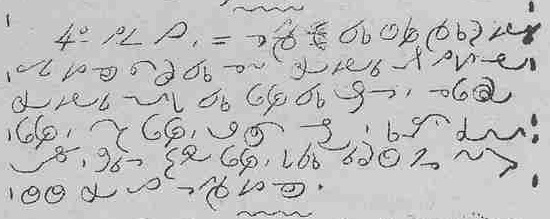
4o. Lakit lo. = Tilikom kopa ukuk kompani klaska
4. Fourth law. = The people of this societyalki klatwa ashnu kopa taii pus klaska tlap laplitas
shall go kneel for the chief so they can receive punishmentpus klaska tsipi kopa mamuk kopa Sondi, tamanwas
when they err in working on Sundays, medicine-manmamuk, shim mamuk, Sawash tans, patlach pasisi[,]
activities, immoral activities, Indian dancing, giving away blankets,slaal, ankati mimlus mamuk, pi kopa kanawi ikta lisivik
playing slahal/stickgame, having anything to do with ancestors, and in anything the bishopwawa pus ilo tilikom klatwa.
tells the people not to go into.– Kamloops Wawa #65 (12 February 1893), pages 27-28
That patlach pasisi in the preceding is a verb phrase, not a noun. Eh? Now:
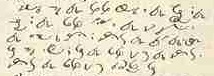
Klaska tiki kopit makmak wiski, kopit [ta]manwas: kopit
They intend to stop drinking alcohol, stop medicine-man beliefs, stoptans: kopit mamuk lahal, kopit pli karc,
[Indian] dancing, stop playing lahal/stickgame, stop playing cards,kopit aias patlach: kluchmin kopit kuli kopa hwait
stop potlatching, for the women to stop going off to whiteman iaka haws; man kopit mamuk piltin kopa kluchmin,
men’s houses, for the men to stop sinning against women,kluchmin kopit mamuk piltin kanamokst man
for the women to stop sinning with men.– Kamloops Wawa #127 (April 1895), page 52
All those wannabe prohibitions are verbal expressions too…
If you’re seeing all of this the way that I am, it sure looks like the good news is, we’ve discovered several ways to express “a potlatch” in Chinook Jargon.
- Patlach pasisi is literally “giving away blankets” (an accurate description).
- Aias patlach is an extremely near miss. I’d have to give it a literal translation in English as “big giving”, which may look like an adjective plus a noun. But in the above context, it’s explicitly one in a string of “stop doing this, stop doing that” verb phrases.
The bad news is that “potlatch” still isn’t a noun in the Jargon. Only in English. (Come on, is anyone really upset about this?)
The worst news, such as it is, is that it takes more than one word to say “a potlatch” in Jargon. You have to work a little…just like you have to work to host a potlatch.
It’s worth knowing the details. They tell you a lot about our history!

Potlatch may be the best transcription of the CW word, but do you know what language it comes from originally? In Nisqa’a the pronunciation is baahlats (stress on the 2nd syllable). I was told by an older speaker that this word, quite obviously a borrowing, is known but avoided as it brings to mind the Kwagiulth custom involving sometimes massive destruction of superfluous goods, while the closest Nisqa’a custom (of redistributing the wealth of a deceased chief as part of funeral and succession ceremonies) was and is still much more subdued and did not involve any destruction of valuable property.
LikeLike
Really good thoughts. Have you seen the fine book “Cis Dideen Kat”? It makes the case for understanding the Babine balhats as their indigenous legal system. As for where the word potlatch came from, it’s highly relevant that it appears to be from Nootka Jargon — not from Nuuchahnulth directly, but instead from pidginized NCN as pronounced by anglophones. My NCN dictionary gives a couple of useful example forms of the root p’a ‘potlatch, make a ceremonial gift during the potlatch ceremony’: p’ačiƛsi ‘I potlatched’, p̓aaƛp̓iičiʔaƛsi ‘I started potlatching’. It was kind of frequent for NCN words to become garbled in their use as Nootka Jargon — maybe that’s due to the customary European method of learning it by manually copying another ship’s records!
LikeLike
YEAH~! So happy you are going to be contributing regularly now…..and I will gladly contribute $5 a month to your staying afloat….I am retired and donate to 4 other worthy causes so it is all I can afford…..
Walk in Beauty, Laura Cyr
________________________________
LikeLiked by 1 person
Hayu masi Laura, I have hundreds of draft posts stored up & want to share one every day! With support like yours that should be easy to achieve 🙂 Dave
LikeLike
I noticed potlatch as a verb in a description of the visit of Duke and Duchess to Victoria in 1901; several of the people of the northern tribes are described as selling their regalia so they could use the money to ‘potlatch’ the Royal couple–to give money to them.
LikeLiked by 1 person
Great one! But it’s in English, eh?
LikeLike
Yes, in English by the reporter, but probably interpreted by the reporter – so what would that mean?
LikeLiked by 1 person
I would need to read it, it would be a good discovery if it was in Jargon.
LikeLiked by 1 person
It’s not in jargon; it’s in the Victoria Times by a journalist in English, but the writer uses the word as a verb.
LikeLiked by 1 person
Understood. Also interesting: finding out when that word came into English as a verb…
LikeLiked by 1 person
The above info was part of my doctoral dissertation, and I am not sure where the citation is at the moment, but will send when I find it. I am so grateful for this site, and I too plan to contribute to it–when I get a job! Thank you again. best, Dr. Marcia V. Crosby
LikeLiked by 1 person