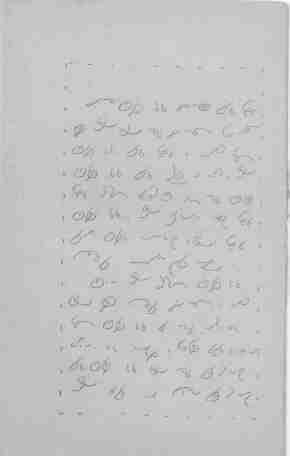
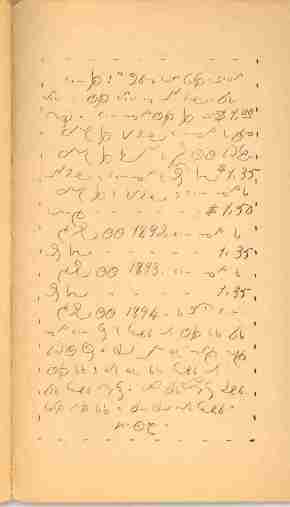
Shortest way to Chinook
Have you taken it?
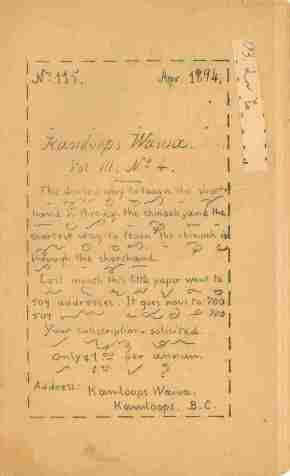
Have you taken it?
Something that eventually occurred to Father Le Jeune, once he had gotten 500+ people literate in Chinook shorthand… They needed to be told to keep their Kamloops Wawa clean and dry. This is not,… Continue reading
Experience introducing college students to phonetic notation as an alternate way to represent their mother tongue suggests you will have a hard time reading this, at first. Want to leave your transcription of… Continue reading
I blogged a Chinook Jargon hymn translation by Rev. C. M. Tate the other day; there are 2 more at the Newberry Library. If you order a copy before I get to this,… Continue reading
Last post, I introduced you to California Pidgin Spanish of the gold-rush times, 1858…now, here is más. This time without Chinook Jargon mixed in. First I want to report that the earliest find I’ve… Continue reading
[ *** Edited for clarity — because I posted this late last night 🙂 *** ] A humorous bit about the high cost of living in San Francisco — how timely! A racist… Continue reading
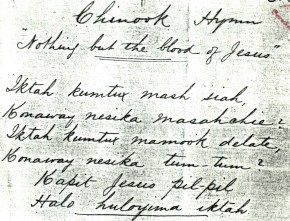
Good old C.M. Tate, the missionary who gave you the spectacularly odd and rather rare “St Marks Kloosh Yiem Kopa Nesika Savious Jesus Christ“, also left this behind: Chinook Hymn “Nothing but the… Continue reading
A Haida mocking song in Chinook Jargon. From Rolf Knight, “Indians at Work: An Informal History of Native Labour in British Columbia 1858-1930“. An aside about Haida fishermen and cannery workers who journeyed… Continue reading
Believe it or not, pidgin languages — like Chinook Jargon — quite frequently interact with each other. Cultural contact situations have, historically, often been cyclone-like: traveling swirls of activity moving from one locale onward to… Continue reading