“Multnomah” as another part-Salish word?
I’ve been pondering the well-known word Multnomah, as in the Multnomah Chinookan people, Multnomah Falls, and Multnomah County, Oregon.
Michael Silverstein in his Handbook of North American Indians, Volume 7 “Northwest Coast” (1990) article “Chinookans of the Lower Columbia” states that máɬnumax̣ as he transcribes it means “those towards the water (those closer to the Columbia River)” [than the Clackamas Chinookans?].
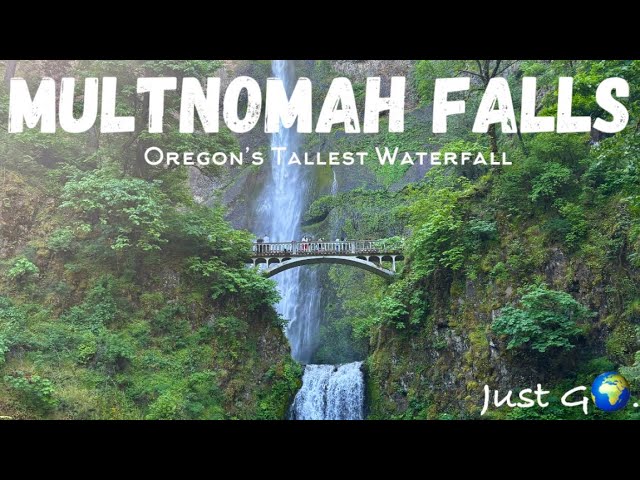
Image credit: Youtube
But he gives no morphological explanation (as usual for him).
From his English gloss of Multnomah, I’d infer Silverstein analyzed the word like this:
- máɬ(i)ni “seaward”, an Adverb
- -ma(x̣) “Collective Plural”, Franz Boas’s “distributive plural“.
I wonder how common it actually is within Chinookan languages to put the Collective Plural suffix onto non-Nouns? In Boas’s “Chinook: An Illustrative Sketch” of the Lower Chinookan language, I only find this as a suffix on Nouns.
Anyway I’m put in mind of the Salish lexical suffix for “people” (and sometimes “river”!), originally *-mix/*-mixʷ and later -məš in most of Salish.
Cowlitz Salish, a co-heritage language of the Fort Vancouver area along with Kathlamet Chinookan, uses its -mix/-mx suffix for “people” on non-Noun root, e.g. its own word for the Cowlitz people: sƛ̓púl-mx “downstream people”, based on the root √ƛ̓əp “below; deep” etc.
Hmm! That’s an exact translation, a “calque”, of MULTNOMAH if we imagine that MULTNOMAH is yet another of the words of the lower Columbia River that shows historical roots in both Chinookan and Salish.
A number of those words show up Chinook Jargon, part of my argument for understanding CJ as a Chinookan-Salish descendant:
I’ve suggested kʰámuksh “dog”, t’ɬəmínxwət “tell lies”, “Cowlitz” and so on in this light.
Interesting to consider how certain patterns of naming get reused across a geographical area.

A bit of a stretch, in my opinion, Dave. The Chinookan etymology is pretty straightforward: -max̣ is a plural suffix in all dialects; i-maɬ (Lower Ch and Kathlamet), wi-maɬ (Kiksht) is how the Columbia R is usually named (maɬ = a large body of water); -ni is an adverbial suffix, maɬ-ni a particle: ‘towards water’. The name is also recorded as a prefixed noun: n-i-maɬn(u)-max̣. The only thing that doesn’t fit perfectly is that -(u)-; seems like it should be -i-.
LikeLike