Where do cheechakoes come from?
Because “cheechako“, meaning a “newcomer” and borrowed from Chinook Jargon, is so important a concept in Pacific Northwest English-speaking culture…I’ve been mighty interested in how old this expression might be.
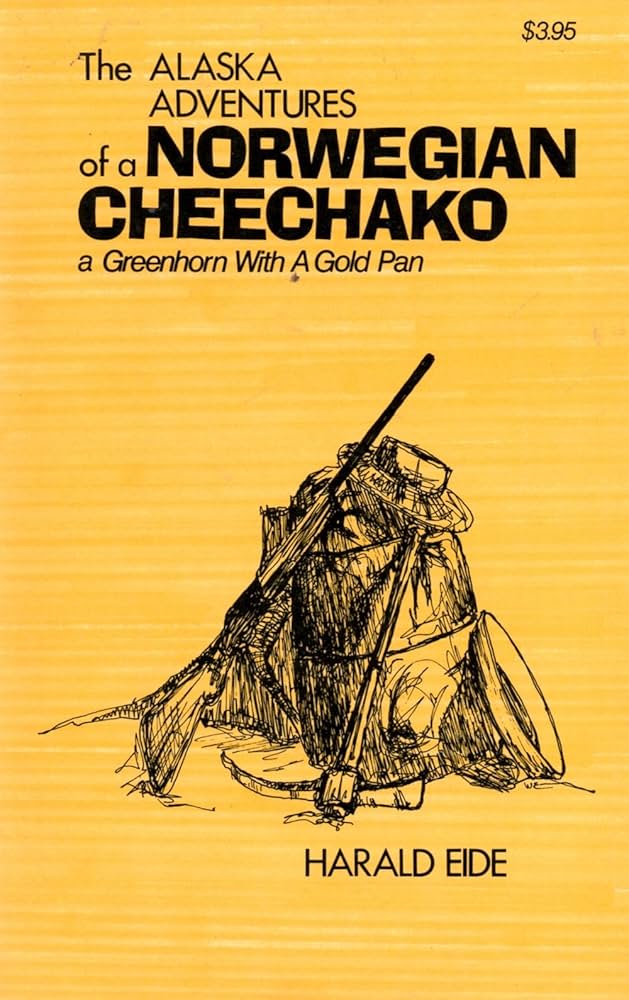
Image credit: Amazon
Louis-Napoleon St Onge has some closely related phrases in his dictionary manuscript from around 1890.
including his < chi-kŏ > (“just arrived”) ‘greenhorn’ and…
his < chi-chako-telikom > (“just came.here folks”) ‘immigrants’.
(He routinely comments that expressions with telikom are plurals. The implication being that the singular would end in tluchman or man, ‘woman’ or ‘man’.)
I have questions about whether St Onge actually heard these around 1870, when he was actively using Chinuk Wawa in Washington Territory…
…because I have doubts he was inspired to add these into his dictionary due to reading them later on, in popular journalism and/or literature about the late 1890s Klondike gold rush…
