Respected elder Dr Louis Miranda tells you what Northern Chinook Jargon is like (Part 2: huloiman)
; More from the Youtube video “Louis Miranda: Squamish elder teaches Chinook Jargon“.
(A link to all installments in this series.)
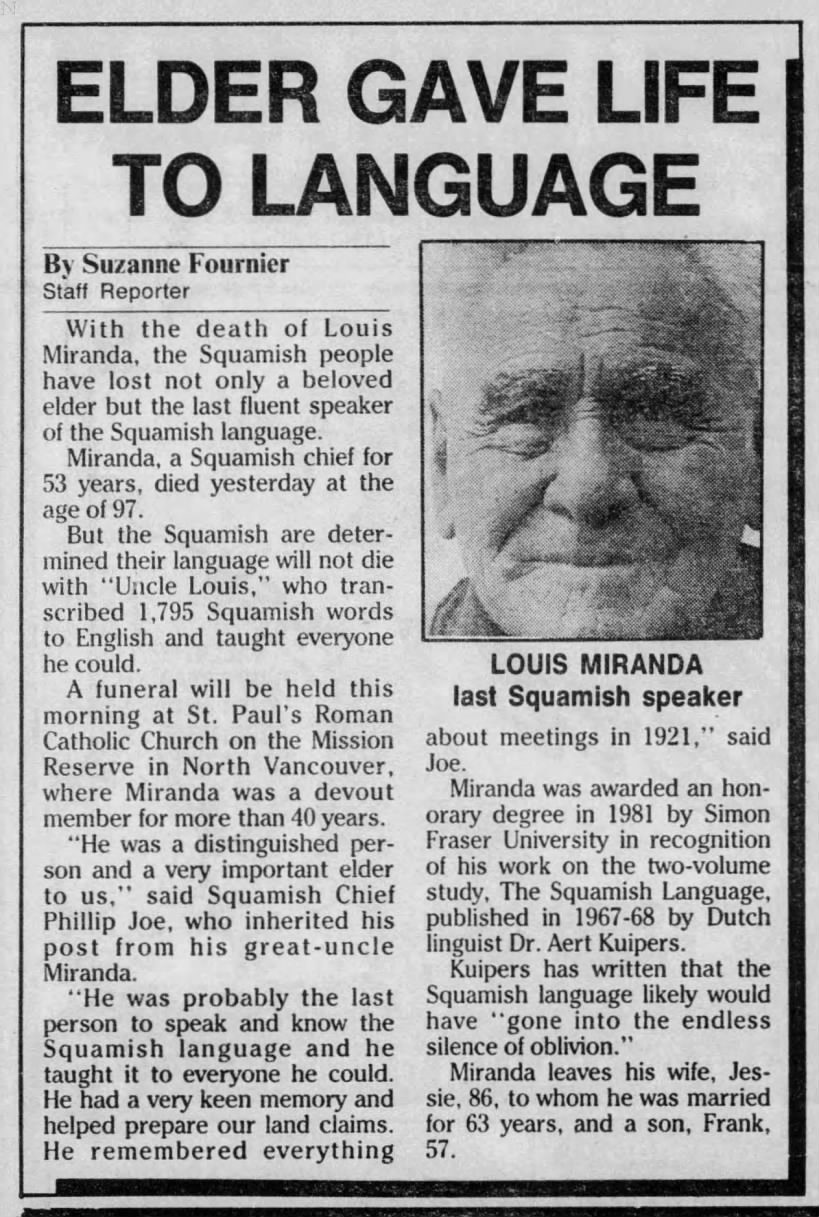
Image credit: Newspapers.com
On June 18, 1973, Chief, and Doctor, Miranda of the Skwxwú7mesh people recorded this absolutely precious document of super-fluent Northern Chinook Jargon.
In this mini-series, I honor his knowledge by examining what “Uncle Louie” teaches us, word by word.
I’ll show words in their “BC Learners Alphabet” spellings, and I’ll make any comments I feel to be appropriate.
Click on the Jargon word to hear Dr Miranda himself telling about it!
TODAY’S WORD:
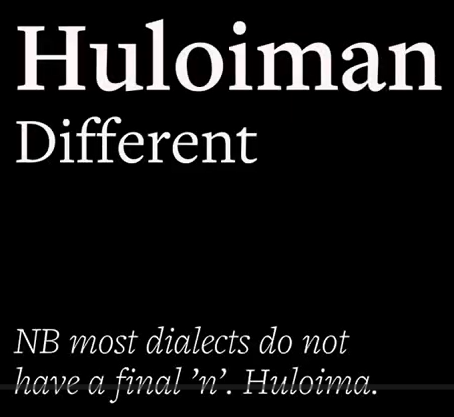
huloiman
‘different’
(starts at 0:47 in the video; also at 2:44)
Dr Miranda here teaches you the distinctive Salish Sea sub-dialect version of this word: huloiman.
Inland, it’s huloima, without the “N” at the end. (In the Southern Dialect, that’s spelled x̣lúyma. Basically the same thing.)
I have a guess that this word took on an “N” due to some folks who didn’t speak much English assuming that it was related to man “man”, tloochman “woman”, wach-man , kin-choch-man “British”, duch-man “German”, etc.
Dr Miranda gives you a good example of this word’s use in a sentence of Northern Chinook Jargon (also at 15:44):
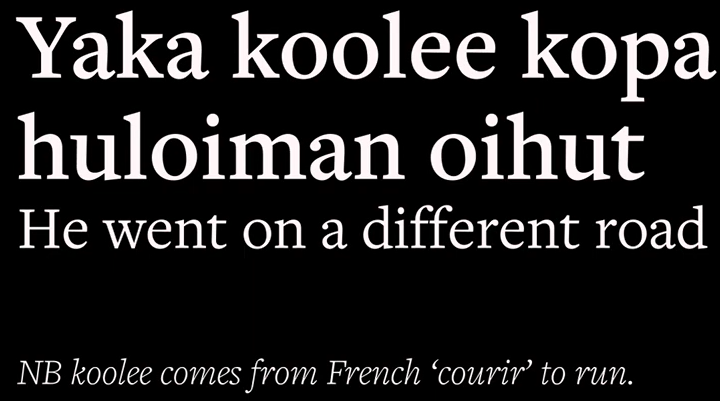
Yaka kooli kopa huloiman oihut.
he travel on different road
“He went on a different road.”
Another distinctly Northern Dialect thing about that sentence is that kooli means “to travel”, and that’s all it means. In the other dialects of Jargon, this word (spelled kúri or kúli) held onto its original Métis/Canadian French sense of “run”, but for the North it came to stand in contrast with tlatawa, which is “to go” to a specific destination.
Also, Dr Miranda’s preposition kopa is pronounced more like kopo most of the time. This, too, is Salish Sea style.
Be sure you click the linked blue word, and practice imitating Louis Miranda’s superb pronunciation!
Dleit haiyoo wuht atlki chako! Lots more to come!
