So many Métis words in interior PNW languages (part 9: Snchitsu’umshtsn / Coeur d’Alene)
Let’s look beyond the heavily traveled transport corridor of the old fur-trade “brigades”……to the territories of some tribes speaking “Southeast Interior Salish” languages.
(Here’s a link to all previous installments in this mini-series.)
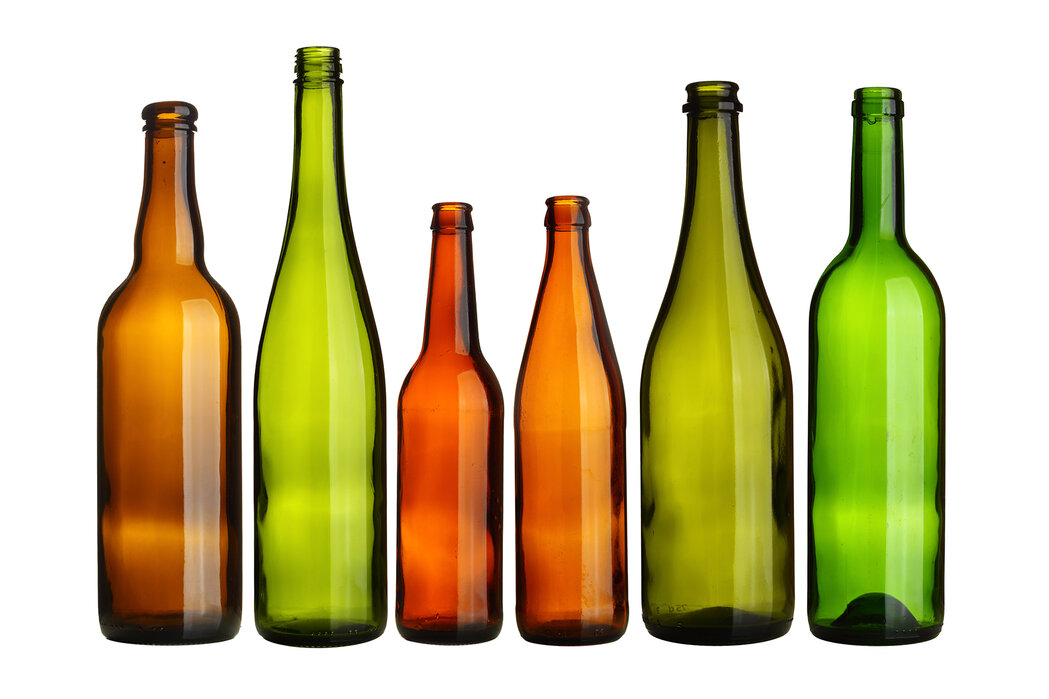
Bottles, or baptisms? (Image credit: Photowall)
That’s what linguists think of as 3 languages (we’ve already discussed the 4th one, Nsyilxcn / Okanagan-Colville):
- Snchitsu’umshtsn / Coeur d’Alene
- “Salish”, which is the shared language of the Spokane, Kalispel, Pend d’Oreille, and Montana Salish/”Flathead” tribes
- Nxa’amxcín / Moses-Columbia
Nevertheless, these lands in northeast Washington, north Idaho, and northwest Montana hosted early permanent fur company “houses” (Spokane House, Saleesh House, etc.).
And Métis families, as well as small communities thereof, sometimes formed in those areas, with men of eastern French-Canadian, Haudenosaunee (Iroquois), Abenaki, Delaware, etc. descent becoming the life partners of local Indigenous women.
Today we’ll look into a book titled “Lawrence Nicodemus’s Coeur d’Alene Dict[i]onary in Root Format”, edited by John Lyon and Rebecca Greene-Wood. (University of Montana Occasional Papers in Linguistics, no. 20, 2007.)
Only a few words in this dictionary stand right out as Métis-Canadian loan words.
Contrast this with the pretty large number of entries that have to have come from the French of European priests. Those are formal religious words from Catholicism, and baptismal names.
We know that there was less direct contact with non-Indigenous folks in Coeur d’Alene territory, back in the fur-trade era, than in neighboring “Salish” lands. So the small number of Canadian words seems about right.
An easily noticeable trait in French-derived words in Coeur d’Alene is that they very often end in a stressed vowel…
…AND also have a long vowel in a syllable before that.
This second feature is somewhat reminiscent of Métis/rural Canadian French pronunciation, although there, it tends to be more restricted to placements at least 2 syllables before the final stress. A by-product of this CdA Salish vowel lengthening is, we can’t always take a word starting in lii… as an indicator that it came from a Canadian/Métis French pronunciation of plural les.
Here are the Canadian words I found, written first in Lawrence Nicodemus’s style that the tribe still uses (and morpheme boundaries added by me as I wish], then in APA phonemics:
- paataq /pa•táq/ ‘potato’
From the typically Canadian patac. - lebuutem /lebu•tém/ ‘bottle, can, flask’
From la bouteille. Later folk-reanalyzed as if it (A) were related to lebeetem ‘baptize; baptism’ (which may have been a strong connection before bottles were common here) and/or (B) contained Salish -m ‘Middle Voice’ suffix. We’ve seen other Salish languages to the north treat this word as if it ended in n, for similar reasons. - lcheemi /lče•mí/ ‘maize, Indian corn’
This is called a French loan in the dictionary, but I don’t yet find a likely source word in my references. A guess might be *le petit maïs* ‘little corn’, in an expected Métis/Canadian pronunciation /lι(p)čimais/. The various problems with that speculation include the fact that Canadian/Métis French routinely calls corn blé d’Inde ‘wheat from India’! Any ideas, readers? - lkaapi /lka•pí/ ‘coffee’
From le café, in the normal Canadian pronunciation ending in /i/. - lokooso /loko•só/ ‘pig’
From le cochon. - laamna /la•mná/ ‘syrup’
From la mélasse ‘molasses’, folk-reanalyzed as if (A) it originally contained Salish -s ‘3rd person possessive’ suffix and/or (B) came from Kalispel speakers, who like to leave off everything after a stressed vowel — see next word. Nearby Salish languages also reanalyze this word. - liipul /li•púl/ ‘chicken, hen’
“Used mainly by the Kalispel”, says a comment next to this word. Not necessarily from a plural, les poules. - l'[-]l’pot /l̓l̓pót/ ‘chalice, cup, dipper, glass’
From the Canadian pronunciation of le pot ‘pot’. - liipwe /li•pwé/ ‘pea(s)’
From the Canadian pronunciation of le(s) pois, not necessarily a plural. - liiti /li•tí/ ‘tea’
From le thé in the Canadian pronunciation. - nors /nors/ ‘barley‘
From l’orge, with a Pacific NW Indigenous-style change to the pronunciation.
All of these are trade goods!
Bonus fact:
I also found:
- spaayol[-]msh /spa•yólmš/ ‘Mexican; Spanish’
From espagnol. The dictionary segments the initial “s” as the Salish noun-marker prefix, a later folk reanalysis.
This word was probably borrowed later, and from Chinook Jargon.
Not being an item of trade 😊, and being more prominent when horse-packing became an important line of business in the Pacific Northwest, Mexican people would’ve been talked about more in Chinuk Wawa than in the earlier intercultural lingo, Canadian French.

I suspect “petit maïs” should be “petit mil”.
LikeLiked by 1 person
So, “little millet”?
LikeLike
In modern French, yes, though while I don’t seem to be able to find it now, I think I’ve seen mil being used for ‘maize’ in overseas varieties of French (cf Portuguese milho).
LikeLiked by 1 person
Intriguing idea! Thank you!
LikeLiked by 1 person
As a matter of fact, Mikael, while I fail to find “mil” for “corn/maize” in North American French, I do find the pronunciation “mie” for < mil > ‘millet’ in Louisiana French, in Valdman’s dictionary. There might be some connection here as you suppose!
LikeLiked by 1 person