“Faire briller”: The case for a Métis source of the mamuk-/munk- Causative
Have I never before pointed out the possibility that Chinuk Wawa’s mamuk- verb inflection (which is munk- in the southern dialect — I’ve usually called it the “Causative”– might be due to to Métis/Canadian French influence in the early-creolized, Fort Vancouver era?
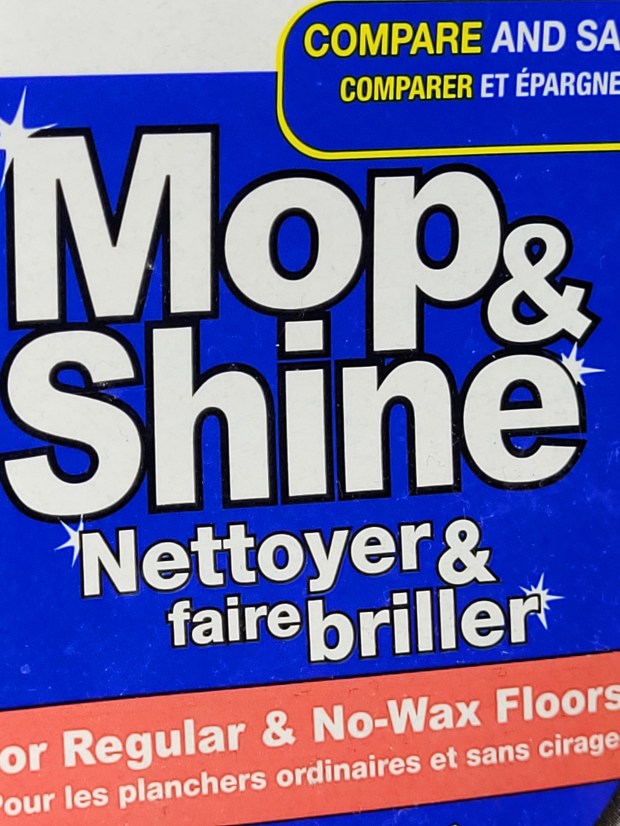
Image credit: my own bathroom
English influence too, I suppose, maybe.
What I have certainly done before is, I’ve pointed out that the “grammatical markers” in CW come from Nuuchahnulth/Nootka Jargon words.
That is, they’re from the precursor to Chinook Jargon, so in a very real sense, they’re the oldest, earliest words in CJ.
This suggests that the prefixes chaku-, hayas-, kəmtəks-, mamuk-, etc. made their evolution from plain old verbs (for ‘come’, ‘be big’, ‘know’, and ‘do’) into productive prefixes quite long ago in the history of the Jargon.
We don’t have data on these prefixal uses, that I’m aware of, until some time into the Fort Vancouver “early creolized” era, in the late 1830s.
For a language that I believe was born circa 1794, that gap of two generations is enormous!
I do think a lot of the development of Jargon “make” + Verb could and did happen in those 40+ years.
The lack of positive evidence makes this a short article.
But, the data from the non-French parent languages of Chinuk Wawa seems weak to me.
SW Washington Salish languages do have a grammaticalized “make” construction. But it’s pretty much confined to “make” + Noun.
Chinookan languages have kinda comparable structures, too. But they’re typically in reverse word order, and they’re built of an un-inflected Particle (there’s a quite limited set of these available) + “make”.
English is a better match. It has “make” + Verb. The main problem here is that speakers of English use that structure less often than French does. They like to leave out the “make”, preferring single-word Causatives like “shine” shoes, “clean” the bathroom, and “boil” some eggs.
Out of the 4 major ancestor languages of Chinuk Wawa, French — i.e. Métis/Canadian French of the Fort Vancover-centred fur-trade community — is the one that both has “make” + Verb, and uses it the most productively. “Faire briller” (‘to make (it) shine’) in our illustration is one of countless examples.
