Typos & Indian reserves in Chinook Jargon
Today’s lesson: learn how to apologize for a mistake in your writing, and how to say “Indian reserve”.
Ukuk Disiyus nsaika wawa, wik
This Decius we were [I (Father Le Jeune) was] talking about wasn’tiaka taii impror, kopit prifikt iaka. Iaka
an emperor, he was only a prefect.cipi nsaika lima pus nsaika mamuk cim iaka
Our hand went wrong when we wrote that heimpror. Mitlait iht impror kopa Rom ankati
was emperor. There was an emperor in Romeiaka nim Dis, kakwa Disiyus, pi wik
named “Des”, thus the “Decius” [we also wrote about], butiaka ukuk.
that wasn’t him.—
That takes care of typos. Now for the other thing:
Kopa Kamlups, pus ayu tikop man klatwa
At Kamloops, when a bunch of white men went overkopa sawash ilihi kopa Ipril <18>, tiki
to the Indian reserve on April 18, wantingmamuk kaw ukuk Kasimir iaka mamuk pu tkop
to chain up that Casimir who shot a whiteman, klunas ilip ayu kopa <100> tkop man
man, there may have been over 100 white menlolo moskit pi klatwa kopa sawash ilihi
carrying guns and going over to the Indian reservepi klaska ayu wawa pus mamuk paia ukuk
and they were talking about burning down thehaws kah Kasimiri mitlait…
house Casimir was in…
— both from Kamloops Wawa #176[b] (May 1899), page 65*
The reason this sawash ilihi struck me was that it may be one of the earliest known uses of the phrase to mean a reserve or reservation. We know the same pair of words from the mid-1880’s:
“Kopit mamook, nika wawa, mika capswalla stick kopa Siwash illahee!” (Stop work, I say, you’re stealing logs on Indian land!) He shouted furiously, threatening dire punishment…’
In that source, the memoir “From Copenhagen to Okanagan”, Siwash illahee (literally, Indian land) occurs a couple of times as Indigenous people defend their land rights from newcomers. It’s not entirely clear whether the phrase carried the specific sense of “(Colville) Indian reservation” yet.
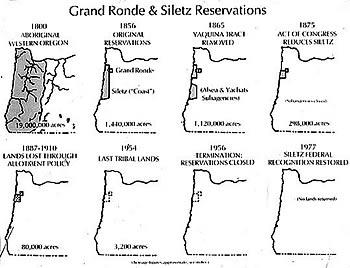
Our best-documented use of this phrase is at Grand Ronde, where their dictionary will show you sháwash-íliʔi meaning their reservation lands. (Related lesson: see the illustration of how those lands shrank. Yikes.) As best I can make out, the earliest we know of this phrase being used there is after the 1880s and 1890s examples just shown.
* Here is a short contemporary news article about these events: “Shot by a Siwash: Kamloops, April 15. This evening Philip Walker was shot by Sol Casimer, a Siwash, at his own door. Walker lived 40 minutes after the shoting [SIC]. The murder was evidently premeditated, and was the result of an old feud. Casimer escaped to the Indian reservation. A large posse is in pursuit.”
