Why are there handwritten marks and notes in St Onge’s copy of Demers and Blanchet (and St Onge) 1871?
This online copy of “Chinook Dictionary, Catechism, Prayers and Hymns” belonged to its editor, Louis-Napoléon St Onge.
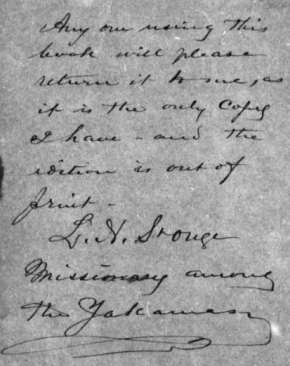
This online copy of “Chinook Dictionary, Catechism, Prayers and Hymns” belonged to its editor, Louis-Napoléon St Onge.
It’s not easy to find one word for a ‘cousin’ in Chinook Jargon.
I thought I had pointed this out previously in this space.
Yes, more good stuff for us to learn from. Here’s the finale of the Credo.
My French-speaking friends are already laughing.
Chris, an economist at UVic, indexed the TN Hibben dictionary a couple of years back.
Words for ‘finger’ differ, and vary in their reach, from dialect to dialect in Chinook Jargon.
I know I’m not alone in having doubted the presence of some “Indian” (sorry) words in Chinuk Wawa that we know originated from far-away Eastern Algonquian languages, and that we know could only… Continue reading
Under naika ‘I; mine’ in Louis-Napoléon St Onge’s handwritten Chinuk Wawa dictionary that’s about 150 years old, there comes a string of Central Dialect entries that express what I’ll call non-core kin. (No offense to… Continue reading
Naika wawa masi kopa Paisley pi Mokwst Alex, for reminding me of a great book by a great anthropological linguist!