“Mucho malo” as widely known pidgin Spanish of western Native people
The usual and grammatical way to say “very bad” in Spanish is “muy malo”.
So then, why do we find “mucho malo” all over the place in the frontier era of far western North America, virtually always in connection with Indigenous people?
Image credit: Nein Records
Here’s an example:
“The Americans, like the Indians, some are good—very good, and some are bad. I like the good ones, who are kind to the Indians, but the bad ones are “mucho malo.”
— interview with “King Weimer” (Placerville area Indigenous man) in the San Francisco (CA) Placer Times and Transcript of October 24, 1853, quoted here.
There are plenty more like it —
About Apache Indians, in a California newspaper:

— from the Oroville (CA) Weekly Union-Record of September 2, 1865, page 3, column 2
Cahuilla Indians, southern California:

— from the American Journal of Science, volume 67 (1854), page 436
Los Angeles area:

— from Out West: A Magazine of the Old Pacific and the New, volume 18 (1903), page 462
Placerville area, northern California:
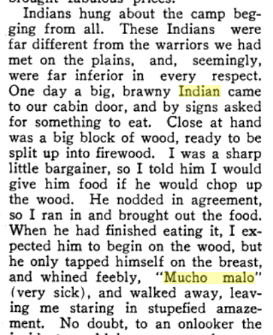
— from “A Child’s Experience in ’49”, Overland Monthly and Out West (1914), page 403
In Arizona, what the observer called a pigeon Spanish / English:
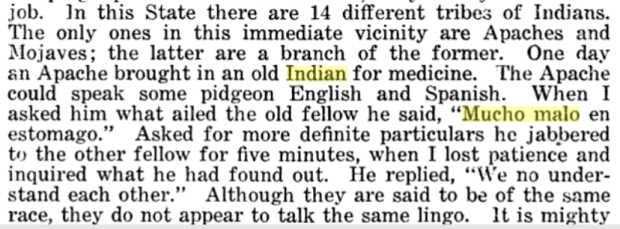
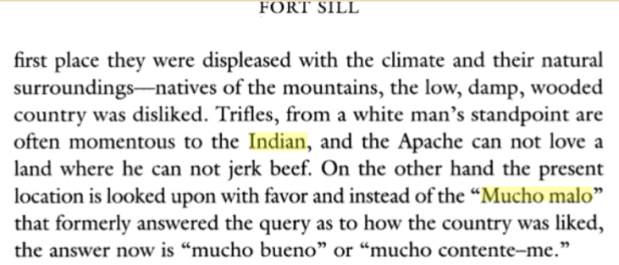


I’ve often said, there was pretty clearly some kind of pidgin Spanish in California and neighboring areas during the frontier period.
