1881, OR: “Chenook”-speaking Webfoot discovers a comet
In the summer of 1881, a newly noticed comet was all over the newspaper pages.
The same issue that gave us the following has reports of folks all over the place quarreling over who saw the damn thing first.
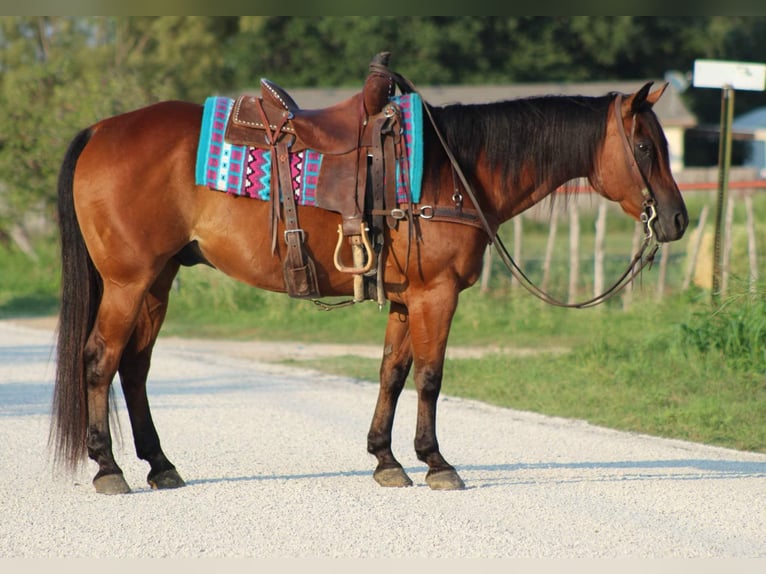
Bay gelding or blue mare? (Image credit: ehorses)
Here’s what was conveyed to a Nevada Territory newspaper by a well-known editor, Wells Drury (1851-1932), who had been orphaned on the Oregon Trail as a baby (good god) and was a buddy of Mark Twain’s:

UP IN OREGON .- A private letter from Wells Drury is to the effect that he is having a very pleasant time up in Oregon, his native State. He is right at home with his brother webfeet, as he speaks Chenook as well as the old boss Chenook himself. He writes that he found the comet, as far as Oregon is concerned. Up there the heavenly visitant is believed to mean that there will be a small run of salmon next year.
— from the Virginia [City] (NV Territory) Daily Territorial Enterprise of July 6, 1881, page 3, column 3
Wells was a native of Oregon, I guess, if we consider that he’d been an infant in the Washington part of the then-Oregon Territory. Auspiciously enough for a future with the Jargon, Drury had been born in New Boston, Illinois!
Here’s a bit more about Wells Drury’s qualifications in Chinooking; he grew up knowing Chinuk Wawa, and at least 2 Indigenous people on a panel of 5 voted for him to receive the job of Jargon interpreter before puberty:

The infant was thereupon adopted by the Rev. Alfred R. Elder, a boyhood friend of [President Abraham] Lincoln. Mr. Elder was named by Lincoln to manage the Indian agency at Olympia, Wash., and took his foster son there in 1861. When the interpreter attached to the post resigned Mr. Elder recommended the 10-year-old boy for the place, but there were other aspirants for the $500-a-year job. A competitive examination was held, with three Indians and two whites as judges. They voted 4 to 1 for young Drury and he held the place five years.
— from the New York Times of May 5, 1932, page 22, column 2
Here’s a bit of Chinuk Wawa-related humor from Drury’s autobiography, “An Editor on the Comstock Lode“, which you can read for free online. Drury remembers, on page 112, a champion racing horse owned by Levi Shelton in Olympia, Washington Territory, with a puzzling name:
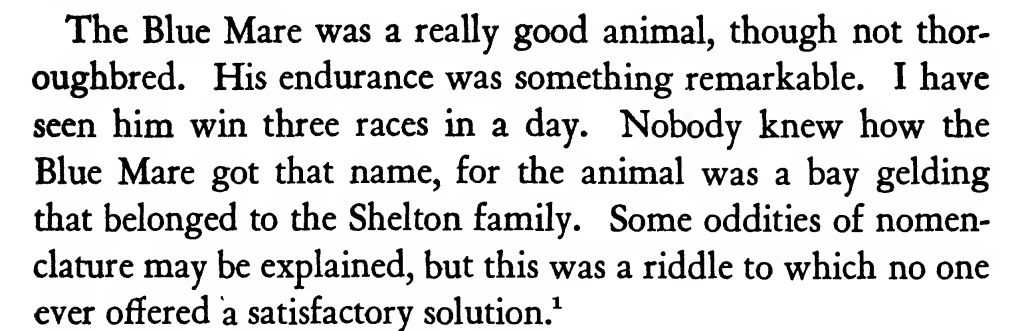
The Blue Mare was a really good animal, though not thoroughbred. His endurance was something remarkable. I have seen him win three races in a day. Nobody knew how the Blue Mare got that name, for the animal was a bay gelding that belonged to the Shelton family. Some oddities of nomenclature may be explained, but this was a riddle to which no one ever offered a satisfactory solution. 1
This mystery is solved by a footnote:

1 A Chinook Jargon word, of French origin, is Le-Blau, “a sorrel horse, chestnut-colored.” (Shaw’s Chinook Lexicon, p. 35.)
Come to think of it, frontier-era pronunciations of líbló might well have run towards a “blue” sound, if Métis/Canadian French habits of speech had any input.
