CA: French Camp (San Joaquin County) is the farthest south we’d look for Chinook Jargon
I’ve seen no indications of Chinuk Wawa influence in any of the Indigenous languages of California that are south of Shasta and Modoc-Klamath…
And that’s barely inside California. Both of those languages straddle the border with Oregon.
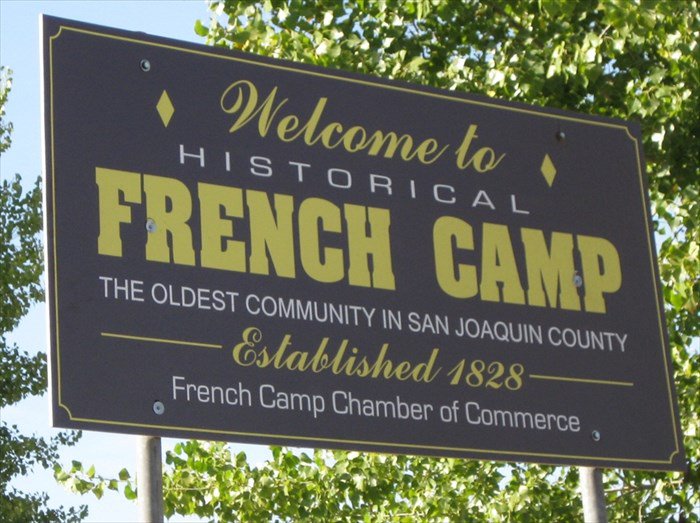
Image credit: Manteca Bulletin
Signs are strong that these southernmost users of the Jargon knew some of it, but not any other newcomer language, in the frontier era.
On the other hand, from Indigenous speakers and in the same time frame, although it’s not a tribal language there’s the tantalizing, amorphous California Pidgin Spanish-English-Chinook Jargon(-and-maybe-Chinese-Pidgin-English-as-well) blend that I’ve documented many times here, through much of interior California and even eastward a ways.
That lingo has to be a separate story, where Native people picked up bits of newcomers’ languages directly.
Here’s where I’ll bring up a theoretical 3rd and final possibility for turning up a few traces of Chinuk Wawa in California — the area of French Camp, in central California, east of San Francisco and south of Sacramento.
That’s a typical western North American, especially USA, name for a locality associated with frontier-era French Canadians and Métis. Other such in our region are the places called Frenchtown, Breedtown, French Prairie, and so on; see below for the California Spanish equivalent of these.
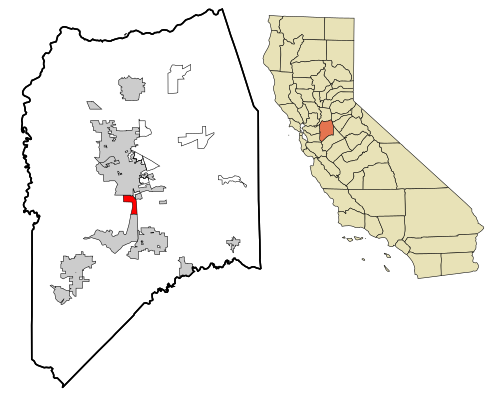
Image credit: Wikipedia
From Wikipedia:
French Camp was the southernmost regular camp site of the Hudson’s Bay Company southern fur brigades sent from Fort Vancouver (now Vancouver, Washington), established by Michel Laframboise in 1832. Its Spanish name was preserved in a land grant dated January 13, 1844 as Rancho Campo de los Franceses.[7] It is commemorated as California State Historic Landmark 668:
Here was the terminus of the Oregon-California trail [Siskiyou Trail] used by the French-Canadian trappers employed by the Hudson’s Bay Company from about 1832 to 1845. Michel Laframboise, among others, met fur hunters here annually, where they camped with their families. In 1844 Charles Maria Weber and William Gulnac promoted the first white settlers’ colony on “Rancho del Campo de Los Franceses” which included French Camp and the site of Stockton.
French Camp was also known as Castoria, the Latin word for “beaver” being “castor”, reflecting its central role in the California Fur Rush.[8]
French Camp was strategically sited at the southern end of the southernmost slough (which became known as French Camp Slough) of the Sacramento-San Joaquin Delta, maximizing the use of the waterway for ease of transportation. A trail led off from the site to the southeast into the foothills of the Sierra Nevada Mountains. It was subsequently used as an alternate route for the Mariposa Road, part of the Stockton-Los Angeles Road, especially favored during the rainy season because of its exceptional drainage. The route was eventually paved and exists to this day as “French Camp Road”.
According to a good map at Wikipedia, for linguistic traces of Chinook Jargon (or French), we would probably look in Yokuts- and/or Miwok-family languages.
That’s a biggish project, because there are several languages and we’d expect few such traces to exist…

