Shaky shaking hands?
One of the first expressions I was taught in Chinuk Wawa was from a Southern-dialect speaker: ískam ləmá.
Simple enough. That’s “take a hand”, a simple command.
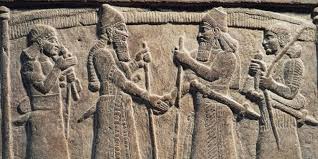
An engraving of shaking hands (image credit: History.com)
Because it was one of the first things I learned to say, it’s very deeply engraved in my memory. I say it automatically when I meet someone, in a Chinook Jargon-speaking environment.
So it came as a shock to me — interrupting my part of a conversation with someone I know well — to realize that for 27 years, I haven’t been saying *ískam líma*!
The usual way of pronouncing the word for ‘hand’ in the Southern Dialect, as you can see in the wonderful 2012 dictionary of the Grand Ronde Tribes, is líma.
Not ləmá.
There are various pronunciations of this Chinook Jargon word. If you check out an old enough source, you can find a third one, the more Frenchlike lemaï from the Fort Vancouver era.
As I reflected on how I was saying ‘shake hands’, I realized I had mentally combined the ləmá variant with the form that I’ve consistently found in Indigenous people’s letters in BC Chinook Jargon, lama.
Interesting fact: the Kamloops Wawa newspaper from the same era as those Native-written letters almost always writes lima!
Just goes to show you, there are plenty of alternating ways of saying Chinuk Wawa words. Referring you again to the 2012 dictionary, you’ll see an average of probably 3 pronunciations supplied for each item.
So don’t be too self-conscious about where your Jargon speech fits into the natural variation that every language experiences.
