Pyusim etymology? Stó:lō!
Calling all Salish scholars; what do you think?The last I can see on my website about the word pyusim is here, where I said I was still working on it.
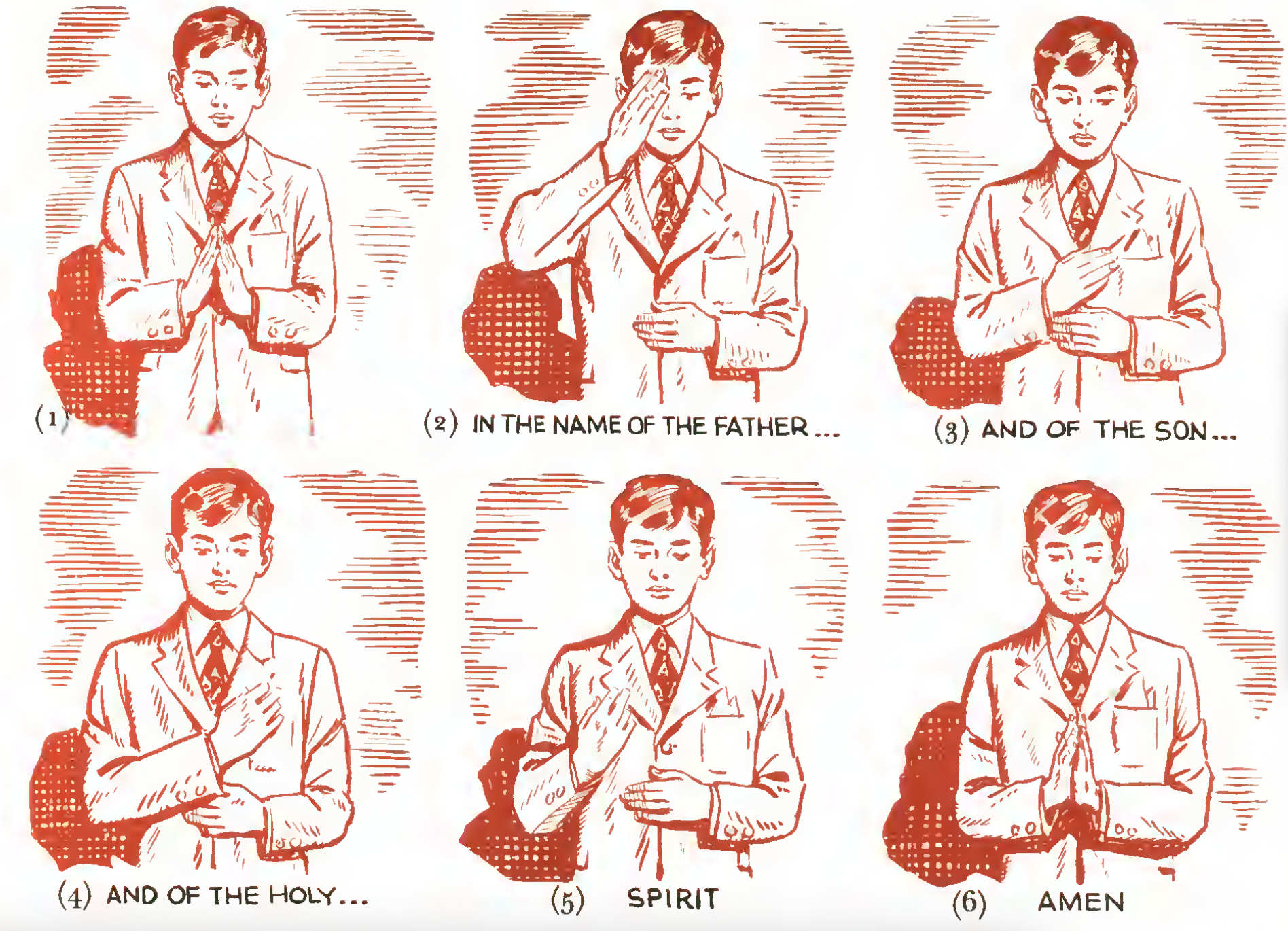
Image credit: Wikipedia
That was 9 years ago!
This word for ‘the Sign of the Cross’ and for ‘crossing yourself’ in Northern Chinook Jargon has remained kind of mysterious to me!
It’s very prominent in the old Kamloops Wawa newspaper. I find it in at least 10 issues.
It’s pretty clear that it’s one of the Salish (usually Central Coast Salish) religious words that are so unique to the Northern Dialect.
But I’ve found the search for its source to be unusually hard.
(1) Morpho-phonological matching
Based on the way it’s written in Chinuk Pipa, the “Chinook Writing” alphabet, I’ve taken it as perhaps formed in one of these ways in a Salish language (listing these from roughly the most probable to less probable):
- pəy-us-m / p̓əy-us-m ~
pəy-əws-m / p̓əy-əws-m - piʔ-us-m / p̓iʔ-us-m ~
piʔ-əws-m / p̓iʔ-əws-m - piw-s-m / p̓iw-s-m
Forms 1 & 2 would involve the pan-Salish lexical suffixes for ‘one’s face’ (-us) or ‘body’ (-əws)— which conceivably makes sense for where the Sign of the Cross is made — and the typical Salish Middle Voice verbal suffix.
Just now, I’m not going to list out all the near-misses that I’ve racked up in the first several Central Coast Salish languages I looked into. I’ll just say that there are incredibly few verb roots I’ve found that even begin to resemble pəy / piʔ / píw. And none of them have what I think are relevant meanings; I find concepts like ‘ready’ and ‘wrinkle’!
What if pyusim was, however, using the Chinuk Pipa letter yu in its less common reading of schwa, /ə/? Well dang, I still don’t find any good matches for a proposed pəs-m 😒
Has my trusty, hard-learned method of analyzing Salish words failed me?
To check, let’s try:
(2) Conceptual matching
Here’s a different approach — do Central Coast Salish languages have any documented words for the same concept as ‘crossing yourself’? I don’t have a dictionary for Nooksack, Musqueam, or Pentlatch, but let’s look at what we’ve got.
(2a) ‘cross one’s body’ (Protestant)
In Twana, < bil3Ku’sad > i.e. bi[-]lək̓ús[-]ad or bi[-]lək̓ú[-]s[-]ad, is reported as the word for ‘cross oneself’. The lək̓ú or lək̓ús element is borrowed from Chinook Jargon’s lakwa ~ laklwa ~ lakrwa, perhaps with later influence from English cross. (It’s fascinating to consider that the original /kr/ sequence from French and/or English might have led Twana speakers to this /k̓/ pronunciation, the latter being more Indigenous but still a rare sound in Coast Salish.) The Twana word may or may not contain -us for either ‘body’ or ‘face’. The rest is known verbal prefix & suffix material, so the literal reading of it is something like ‘Continuative-cross-body/face-Active*’. (Active* being my guess about the -ad.) Ah!
The Skokomish people, i.e. Twana speakers, were evangelized by Protestants. Now check out what we find among their close kin who dealt with Catholics instead…
(2b) ‘gesture on one’s body’ (Catholic)
Rather a different concept, however, seems to characterize the rest of the sister languages in Central Coast Salish.
In Twana’s northerly neighbor Klallam, ‘to cross oneself, bless oneself, make the sign of the cross’ is nəxʷ-ƛ̓əkʷ-ús-əŋ. Timothy Montler’s awesome dictionary says this is literally ‘Locative-take-face-Middle.Voice’. (Something like ‘be taking something over/across your face’?)
Next north is Saanich. In that language, WMETOSEN is ‘to cross oneself (as a blessing)’, i.e. phonemically xʷ-mət-ás-əŋ, literally ‘Locative-cross-face-Middle.Voice’ according to another superb dictionary by Montler. I wonder if that root mət ‘cross’, which occurs only in this word, might in fact be a variant of mət̓ ‘point’ (at)?
A little further north is Sechelt, with its kép-íws-am and its reduplicated form kékp-íws-am, both ‘crossing oneself (making the sign of the cross)’. The root kép appears to denote ‘feel/touch with one’s hands’; the suffix -íws is ‘body (general)’, and the suffix -am is again the Middle Voice of a verb. So: something along the lines of ‘touching one’s body with one’s hands’.
The Sliammon word is etymologically the same, qap-ɛws-əm ‘make the sign of the cross’.
Not too far away on the BC mainland is Squamish, where p̓t[-]ús[-]m is ‘cross oneself; make the sign of the cross’. The root’s meaning isn’t evident to me from the “Skwxwú7mesh Sníchim Skéxwts” dictionary, but again we find the suffixes for ‘body’ or ‘face’ and ‘Middle Voice’. (The dictionary only lists ‘face’.) So this word is similar in form and concept to what we see in the nearby sister languages.
And in Brent Galloway’s just plain monumental dictionary of Upriver Halkomelem (Stó:lō), pyusim has its closest match of all, píy-ews-em ~ pí-ws-em (Chehalis, BC dialect pá:y-ews-em) ‘make the sign of the Cross, cross oneself’. This, we’re told, is ‘bend-on.the.body-Middle.Voice’. I had thought ‘bend’ was a silly concept, but it turns out it’s exactly right.
(3) Answer found
And because Stó:lō is the traditional language around the oldest BC base of operations of the Oblate missionary priests (St. Mary’s, Mission, BC), this best phonological match is logically the etymology of pyusim!
Takeaways: our understanding of how to parse a Salish word into its components is in fact valid.
And, there’s an areally shared semantic strategy among Central Coast Salish languages where Catholic (as opposed to Protestant) missionaries worked, where the word for ‘sign of the cross’ is literally ‘make a gesture on one’s body’. I suspect this is an instance of “calquing”, loaning the structure of a word rather than bluntly sharing the word itself. So, a neat example of language contact.
Bonus fact:
Very different from Coast Salish, the Interior Salish languages mostly rely on their root tq ‘touch’, with a varied selection of suffixes, to express making the sign of the cross.
I haven’t found any words for this concept in the remaining Salish languages, such as SW Washington (“Tsamosan”), Tillamook, or Nuxalk.
