Chinook Jargon does have gender (just not female/male, and only in verb phrases)
My current reading of B. Jagersma’s astonishingly fine grammar of the first known written human language, Sumerian, reminds me to dash off a technical point that I ought to be emphasizing, because everyone has assumed it to be impossible:
Chinuk Wawa, or call it Chinook Jargon, does have grammatical gender!
Folks too often have assumed, without checking for evidence, that a pidgin/creole language can’t have gender. Whoops.
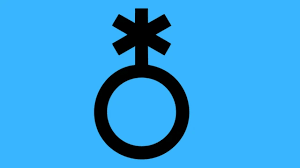
Image credit: “Non-Binary meaning: Wetin be dis gender identity and why e get different pronouns”, BBC News Pidgin
I was reminded of this by Jagersma’s demonstrating that Sumerian has two genders, “human” and “non-human”.
As I bet you already know, the Jargon doesn’t have the kinds of genders that you’d relate to phenomena like biological sex — you know, female, male, or the ever-popular “neuter”. Why, just the other day, I told you that that particular fact about CW traces to Salish parentage.*
However, us descriptive linguists analyze what are traditionally called “noun classes” (such as the 19 in KiSwahili) and “grammatical genders” (such as the 3 in Chinookan) as being the same thing. Those gender systems are one kind of noun-class system.
I’m comfortable calling the Chinuk Wawa noun-class system “gender”, if for no other reason than that it’s quite small and pertains to qualities of humans, as sex-related systems typically are.
The grammatical behavior of verb phrases in the Jargon (all dialects!) displays a distinction in inflection between two classes, i.e. two genders:
- What I’ve long called “animate” (singular yaka ‘she/he’ / sometimes ‘they’, and plural ɬaska ‘they’),
- versus “inanimate” (singular/plural Ø, the “silent IT/THEY”).
Chinuk Wawa, then, is in the illustrious company of such languages as the Algonquian family and, by some analyses, Proto-Indo-European. Those languages also make a primary distinction of ±animacy.
(When I first published a paper on this, I was calling it “Differential Object Marking”. “Gender” works better.)
Much as in Chinookan, English, and Métis-Canadian French (which are 3 of the 4 main “parents” of Chinook Jargon), it’s only in the 3rd person that you find a CJ gender distinction being made in verbs.
But I’m being more specific here: as in English, the gender agreement in Jargon is only within verb phrases. It’s manifested in the obligatory pronouns, which are arguments of the predicate.
It’s not also in noun phrases, which then is a structural difference from Chinookan and Métis-Canadian French. (English doesn’t have enough of a consistent noun grammatical-gender system to get hung up on.)
ikta mayka chaku-kəmtəks?
What have you learned?
*CJ nouns, and pronouns, don’t take any special morphology (markers, or special adjective agreement), based on their gender. That’s what I was writing about the other day regarding the Salish heritage of CJ yaka. It’s a totally invariant pronoun, being used identically for masculine, feminine, & other referents.
The gender categorization of Jargon nouns (as in many other languages) is instead semantic: those nouns denoting major living things such as humans and those animals we see as being individuated (more or less as having personalities) are the “animates”. Everything else, including the corpses of animates, is the “inanimates”.
For a pretty good discussion of another Chinook Jargon noun-classification dimension, see my “Count and Mass Nouns in Chinuk Wawa“.
