‘Lust’ is ‘acting like a dog’
Granted, this one counts as religious talk more than real-world Chinuk Wawa…
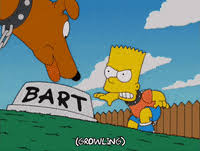
Image credit: Giphy
But it’s worth our attention to consider how someone decided to translate ‘lust’ so that it would be understood by Jargon speakers. Here, it’s put across as kamuks-mamuk — ‘a dog’s doings; acting like a dog’. Recall, if you will, that in the Indigenous Pacific Northwest, ‘dog’ is often said to be the worst insult.
This is from the Chinook “Kamloops Wawa” newspaper, #131 (August 1895), page 124, in “Our Indian Catechism”.
This passage also uses the frequent Northern Chinook Jargon expression latet (literally ‘head’, here spelled latit) for ‘the reason; the cause’ of something…
<72.> Kansih-ayu latit kopa masachi mamuk?
‘72. How many reasons for doing bad are there?’=Sinmokst latit kopa masachi mamuk:
‘There are seven reasons for doing bad:’sahali-tomtom, iktas-tomtom, kamuks-mamuk,
‘arrogance, possessiveness, acting like a dog,’chiləs, patl makmak, saliks, lisi.
‘jealousy, being full of food, being angry, and being lazy.’[For comparison, the English-language shorthand version of this:]
<72.> Haw meni kapital sins ar ther?
‘How many capital sins are there?’=Sevẽ: praid, kovetosnes, ləst,
‘Seven: pride, covetousness, lust,’ẽvi, ẽger, glətoni, ãd sloth
‘envy, anger, gluttony, and sloth.’
