1874, OR: What Quin[a]by seth
This is good Grand Ronde Chinuk Wawa of its time, even though it’s put into a weird English-language matrix.
So this quotation of a well-known Salem-area Chemeketa K’alapuya chief is likely reliable:
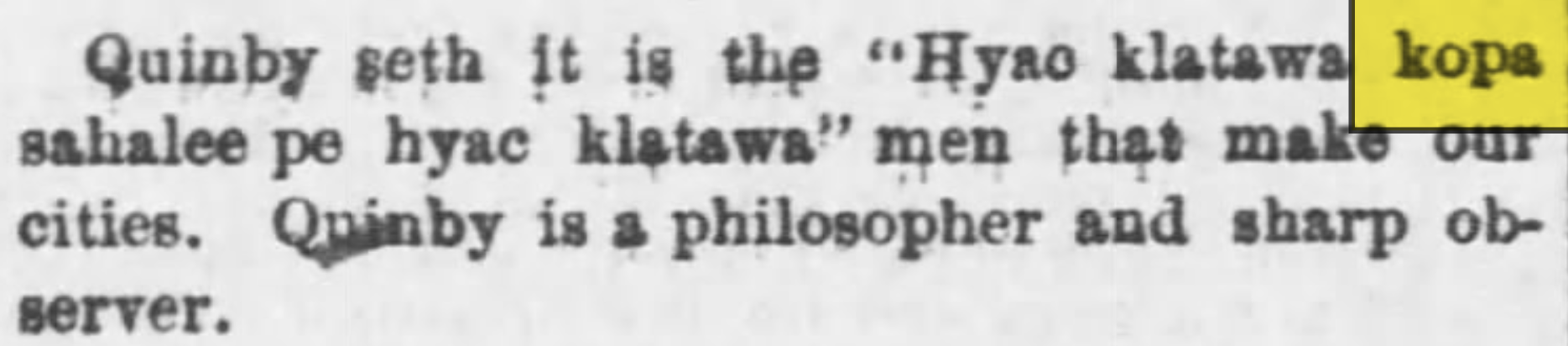
Quinby seth [saith] it is the “Hyac klatawa kopa
sahalee pe hyac klatawa” men that make our
cities. Quinby is a philosopher and sharp ob-
server.
— from the Salem (OR) Weekly Oregon Statesman of July 11, 1874, page 3, column 3
I strongly doubt that Quinaby/Quinaby used these conjoined phrases as pre-noun modifiers when he said this in Chinook Jargon. That’d be a rare structure, especially (A) at that time and (B) when the modifying string is so long.
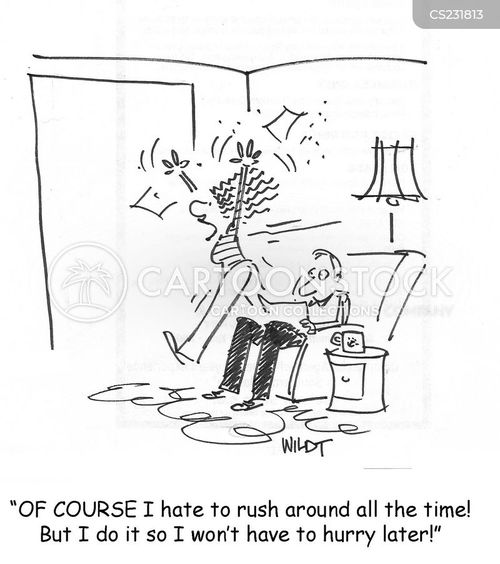
Image credit: CartoonStock
But, once we supply a non-cited subject such as ɬaska ‘they’, we have a totally fine Jargon sentence:
“[Klaska] hyac klatawa kopa sahalee pe hyac klatawa.”
[ɬaska] áyáq-ɬátwa kʰapa sáx̣ali pi áyáq-ɬátwa.
[they] quickly-go to sky and quickly-go
‘[They] rush off to heaven and rush around.’
Bonus fact:
The above Southern Dialect phrase, áyáq-ɬátwa, closely parallels what I find in the Northern Dialect, where people prefer to specify when they mean ‘running, hurrying’.
In the North, the word kuli exists, which you may know as Southern kúri. But in the North, that word doesn’t mean ‘to run’ anymore — it’s just generic ‘travel, move around’. Which is what ɬátwa gets used for in the South.
So it appears that both dialects developed this same mechanism to specify ‘running (around)’, by adding in the adverb áyáq ‘quickly, fast’. In the North: aiyak-kuli. In the South: áyáq-ɬátwa.
