1893 “History of Washington: The Evergreen State”: Volume 1
Just 4 years into statehood, Julian Hawthorne and G. Douglas Brewerton rushed into print the 2-volume “History of Washington: The Evergreen State”.
They had plenty of access to information that’s of interest to us Chinook Jargon people.
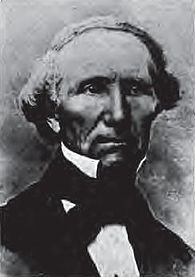
John Ball (1794-1884) (image credit: Wikipedia)
Volume 1 — pages 155-156 tell how John Ball (whose Chinook Jargon “Manuscript 195” [Folder 6] we know well, thanks to George Lang’s book “Making Wawa”), and then Solomon Smith, were the first two school teachers at Fort Vancouver and indeed in the Pacific Northwest. They dealt with students whose only common language is early-creolized CJ, what I call the Central Dialect.
(If you need a warning, there’s an old-fashioned joke about corporal punishment in the following — “produce an impression [probably a striking one]”.)


A certain Captain [Nathaniel Jarvis] Wyeth, of Massachusetts, about this time
conceived the idea of establishing salmon fisheries on the Colum-
bia River in connection with an inland trade with the Indians
for furs. With this intention he sent out a vessel laden with
trading goods ; the ship was never heard of from the day she
sailed. Wyeth and his party coming, fortunately for them,
overland, reached Fort Vancouver October 29th. Being thus
disappointed, with true Yankee readiness two of the party
turned to the readiest bread-winner of a New Englander in
distress-school-teaching, and school-teaching under difficulties
withal. John Ball, the first to make an attempt in this new
direction, accepted from the chief factor, Dr. [John] McLoughlin, an
engagement to teach school for six months, and failed. It was
possibly rather more difficult to teach the idea of the young
Indian how to shoot than his hand. The next to try this doubt-
ful experiment was Solomon H[oward]. Smith, whose name at least in-
dicates wisdom equal to the task. The school was opened, and
the teacher soon almost in a condition of despair; discouraged
was too mild a term to express his embarrassment. He tells us
that the scholars, all Indians, came in talking their native lan-
guages. The confusion of Babel was as nothing to it. Cree,
Nez Perce, Chinook, Kliketat, and a few others produced a
mingling of tongues which, as the poor pedagogue came only
prepared to teach English, simply deafened him. He says, “I
could not understand them, and when I called them to order
there was just one who could understand me. As I came from156
a land where discipline was expected in school management, I
could not persuade myself that I could accomplish anything
without order. I gave directions, and, to my surprise, the only
one who understood them immediately joined issue with me
upon my mode of government in school. While endeavoring to
impress upon him the necessity of order, and through him his
fellows, Dr. McLoughlin, the chief factor, entered ; to him I ex-
plained my difficulty. He investigated my complaint, found
my statements correct, and at once proceeded to produce an im-
pression [probably a striking one] on the refractory pupil which
prevented any further trouble in governing. I continued in the
school over eighteen months, during which the scholars learned
to speak English. Several could repeat Murray’s grammar ver-
batim ; some had gone through arithmetic, and upon review
copied it entire. These copies were afterward used as school-
books, there having been only one printed copy at Fort Vancou-
ver.” (The reader may fancy in what condition the “only orig-
inal’ must have been by the time that twenty-five young savages
— the number of pupils-had finished their English education.
Surely the lines of Washington’s more modern instructors have
fallen to them, by comparison at least, in pleasant places.)
On pages 582-583 we learn of a Spokane-area Settler, P[hilander]. Gilbert, who talks good Chinuk Wawa. We ought to ponder how he managed to acquire such skill, which normally came from interacting with Indigenous people, when we’re told of his benefiting from introduced epidemics and having “more trouble with the savages [sic] than most settlers”. However, we do know that he was a fairly early settler in Benton [County], Oregon (by 1855), and most of that wave of Settlers did necessarily wind up knowing excellent Jargon…

GILBERT, P., farmer, of Latah, Wash., was born in Ohio, May 20th, 1834, the
son of Lorenzo Dow and Helen (Belknap) Gilbert. His father was a mill-owner
and of English descent-possibly of Sir Humphrey Gilbert, of world-wide fame.
The eldest of nine children, young Gilbert accompanied his parents to Iowa in
1841, where he resided until 1847, and then removed to Oregon. In 1855 he mar-
ried Miss Mary Watts, a native of New York State, a descendant of an old Eng-
lish family. Six children grace their union-four sons and two daughters. Mr.
Gilbert, in common with other pioneer settlers of the Pacific Northwest, has had
many adventures with Indians, both in Oregon and after his arrival in the Terri-
tory of Washington, some of which were very interesting ; but their attempted
raids were not entirely without compensation, for the settlers left their mark upon
the hostiles as they erossed the plains, distributing measles in its worst form,583
which, with the advantage of Indian treatment, thinned out the red-skins consid-
erably. Mr. Gilbert speaks the Chinook language as fluently as his own, an ac-
complishment which has stood him in good stead both in Oregon and Washing-
ton. He settled in Washington in 1877, endured many privations, and had more
trouble with the savages than most settlers. He is an earnest worker in the Sab-
bath-schools of the Methodist Church, of whose communion he is a member,
a contributor to all public institutions, and deeply interested in the cause of
morality and educational advancement. Pecuniarily he is well endowed, being
the owner of a fine farm in one of the most fertile valleys of the State, amply sup-
plied with all needed accessories, and boasting a beautiful orchard prolific in
fruitage.
Bonus fact:
The historically important Benton County, at the time Mr. Gilbert lived there, was one of very few in Oregon Territory. So it was enormous. According to a good Wikipedia article:
At the time of its formation the county included all the country west of the Willamette River, south of Polk County and running all the way to the California border in the south and the Pacific Ocean in the west.
The county was created out of lands originally inhabited by the Klickitat [Sahaptins], who rented it from the Kalapuyas for use as hunting grounds. All aboriginal claims to land within Benton County were ceded in the Treaty of Dayton in 1855. Portions of Benton County were taken to form Coos, Curry, Douglas, Jackson, Josephine, Lane and Lincoln Counties, leaving Benton County in its present form.
The city of Marysville, later renamed Corvallis, was made the county seat in 1851. The city briefly was the capital of Oregon.
