Didactic dialogues in CW dictionaries (Part 5: This City of Ours)
Sort of a strange place to find example sentences of Chinuk Wawa: a civic history textbook for Seattle kids.
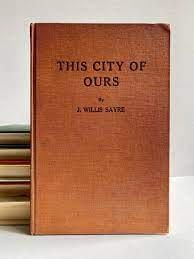
Image credit: Etsy
(All installments in this mini-series.)
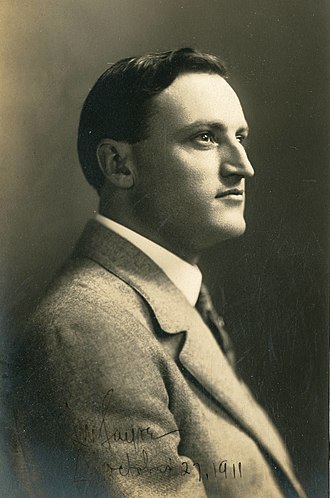
Long after the frontier era, during the Great Depression of the 1930s, “This City of Ours” was self-published by J. Willis Sayre (in 1936).
In the Appendix, we’re told that “the old men and women of the various tribes can still converse fluently in Chinook with the rapidly-diminishing number of pioneers who understand it.” (Page 189.)
Page 190, “to give you an idea of Chinook”, includes the following utterances in its Jargon vocabulary sample.
But of course you shouldn’t expect them to be among the most reliable examples to follow, having been concocted so long after the language was in regular use in Seattle.
Sayre’s family came from the eastern USA to Seattle only around 1890, pretty darn late for Chinuk Wawa purposes.
You can see there are differences between what Sayre says these mean and what I say they mean…
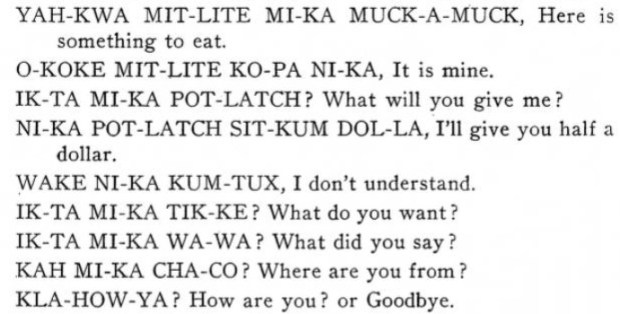
- YAH-KWA MIT-LITE MI-KA MUCK-A-MUCK, Here is something to eat.
= yákwá míɬayt mayka mə́kʰmək.
‘Here is your food.’ - O-KOKE MIT-LITE KO-PA NI-KA, It is mine.
= úkuk míɬayt kʰupa nayka.
‘This is at my place.’
Settlers often tried to express ‘belong to’, and ‘it’s mine/yours/hers etc.’, a very important cultural concept of the Whites, with strategies such as this míɬayt kʰupa nayka expression. There do exist clear expressions of this kind of proprietorship in tribal languages of the region, but not in the Jargon. You’d have to talk your way through the idea laboriously, saying something like nayka iktʰas ukuk ‘this is my stuff’. - IK-TA MI-KA POT-LATCH? What will you give me?
= íkta mayka pá(t)lach?
‘What will you give?’
Notice how the Settler speaker re-pidginizes the Jargon, leaving out the complication of an Indirect Object (kʰapa nayka). - NI-KA POT-LATCH SIT-KUM DOL-LA, I’ll give you half a dollar.
= nayka pá(t)lach sítkum dála.
‘I’ll give a half dollar.’
Same comment as with the preceding sentence. Sayre may have heard the Pacific NW folk songs that use the line ‘I’ll give you a half dollar’ [for prostitution]. - WAKE NI-KA KUM-TUX, I don’t understand.
= wík nayka kə́mtəks.
‘I don’t understand.’
It’s of mild interest that the speaker doesn’t use the more typical Northern Dialect CJ negator hílu a.k.a. “halo”. But he’s showing that he knows his Jargon from old Seattle settlers, who indeed brought the Southern Dialect wík with them from Oregon. - IK-TA MI-KA TIK-KE? What do you want?
= íkta mayka tíki?
‘What do you want?’ - IK-TA MI-KA WA-WA? What did you say?
= íkta mayka wáwa?
‘What did you say?’ - KAH MI-KA CHA-CO? Where are you from?
= qʰá mayka cháku?
‘Where do you come from?’
Sayre’s translation is rather free, but his Chinuk Wawa here is excellent. - KLA-HOW-YA? How are you? or Goodbye.
= ɬax̣áwya(m).
‘Hello. / Goodbye.’
Sayre shows English-language influence, as so many Settlers did in their Jargon, by translating this interjection of greeting as the similar-sounding but unrelated English question ‘How are you?’