1835: Kanakas, too, called Americans “Boston”
I’ve previously shown you that Americans were called Boston by Indigenous people of the Northwest Coast, and by French-Canadians.
This was in the “contact” and “early frontier” eras out here.
Now I find that this terminology extended to the pidgin-speaking Polynesians, who supplied much of the labor force in the Pacific Northwest fur trade.
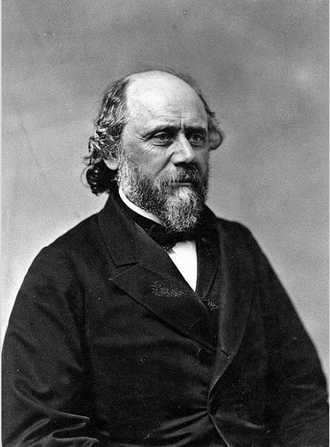
Image credit: Wikipedia
A sailor’s excellent memoir, by Richard Henry Dana Jr., “Two Years before the Mast” (New York: P.J. Collier & Son Corporation, 1937), pages 145-146, tells us:
Every Kanaka has one particular friend, whom he considers himself bound to do everything for, and with whom he has a sort of contract, — an alliance offensive and defensive, — and for whom he will often make the greatest sacrifices. This friend they call aikane; and for such did Hope adopt me. I do not believe I could have wanted anything which had, that he would not have given me. In return for this, I was always his friend among the Americans, and used to teach him letters and numbers; for he left home before he had learned how to read. He was very curious about Boston (as they call the United States); asking many questions about the houses, the people, etc., and always wished to have the pictures in books explained to him.
This is just 10 years into the Fort Vancouver era.
Dana didn’t visit the Pacific Northwest, and that’s precisely the reason why I find his report valuable. It shows us Americans were known as Bostons among many non-European nations!
Plus, in the first decades of contact between the USA (primarily the Boston, Massachusetts area) and the Pacific Northwest coast, Hawai’i was a frequent stopping-off place for the explorers and traders.
Elsewhere Dana remarks how absolutely everyone called Polynesians Kanaka (another word famously used in Chinuk Wawa), and how those folks spoke a pidgin mix of English and Polynesian languages such as Hawai’ian. He accurately quotes a good deal of this lingo, which he must have spoken well.
His book is a totally great read.
By the way, I checked in Emanuel Drechsel’s book “Language Contact in the Early Colonial Pacific: Maritime Polynesian Pidgin before Pidgin English” — and didn’t find any mention of the word “Boston” within the Polynesian Pidgin. I wonder if traces of it might turn up there.
