More humor in Chinuk Wawa: The culture of literacy
Something that often comes up in the old Chinook newspaper is an ability to see what’s funny in a negative experience.
Here’s a fun, and instructive, case study from Kamloops Wawa Number 203[a] (December 1902), page 185.
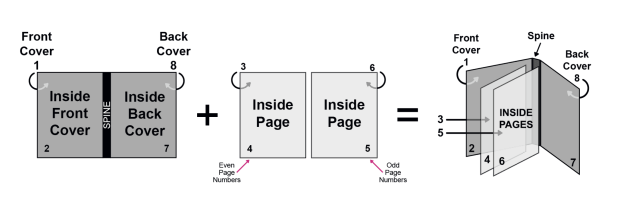
An idea of the issues at play (image credit: Printing Center USA)
Here, we get a snapshot of one moment a decade into the Chinuk Pipa literacy of southern British Columbia, where Indigenous people are confronted with the technological backdrop of having a “Chinook paper”.
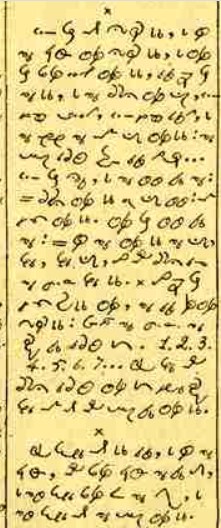
Iht man tlap Chinuk pipa, pi wik
‘This one man received the Chinook newspaper, and it wasn’t’iaka kipwit ukuk Chinuk pipa, pi ukuk
‘sewed up, that Chinook paper, and that’man mamuk halak ukuk pipa, kakwa tkop man
‘man unfolded that paper, like the white man’s’iaka pipa, pi iaka nanich ukuk tzim, iht
‘paper, and he saw that writing, some of it’klatwa sahali, iht klatwa kikuli, pi
‘going upwards, some of it going downwards, and’iaka tomtom iaka drit tzipi ukuk pipa: iaka
‘he thought, “This paper is really messed-up: the’siisim kanawi mikst kakwa lasup…
‘stories in it are all mixed up like soup…” ‘Iht man chako, pi iaka wawa kopa iaka:
‘Another man came along, and he said to him:’= Nanich ukuk pipa ayu tzipi wawa: drit
‘ “Look, that paper is all messed-up words: it’s really ‘kaltash ukuk pipa. Ukuk man wawa kopa
‘good for nothing, that paper.” That (first) guy said to’iaka: = Wik iaka ukuk pipa iaka tzipi,
‘him: “It’s not this paper that’s messed-up,’maika, maika tzipi, ilo tlus nanich kata
‘it’s you, you’re messed-up, not paying attention to how’iaka oihat maika pipa. < X > Ilo tkop man
‘your paper’s path runs. X It’s not a White-man’kaltash nyus pipa ukuk, iaka kakwa buk ukuk
‘junk newspaper, this one, it’s like a book, this’Chinuk pipa: mitlait iaka oihat, iaka
‘Chinook paper: it has a direction,’nombir kopa kanawi pich. < 1.2.3. >
‘every page’s number is on it, 1, 2, 3,’< 4.5.6.7… > Pus maika tlus
‘4, 5, 6, 7… If you pay’nanich kanawi ukuk pich klaska nombir
‘attention to each of these pages’ numbers,’maika drit tlap tlus siisim kopa ukuk pipa.
‘you’ll actually get good information from this paper.’< X >
Pus msaika tlap pipa kakwa, pi wik iaka
‘If you receive a paper that’s like that, and it’s not’kipwit, tlus mamuk kipwit iaka kopa ilip,
‘sewed up. please sew it up first,’pi iawa msaika mamuk kət iaka livs, pi
‘and then you can cut its “leaves”, and’iawa msaika tlap iaka siisim ukuk pipa.
‘then you’ll catch onto this paper’s information.’
