1872: “Letter written by an Indian Chief” at Grand Ronde
Without preamble, a local newspaper published what it called a “Letter Written by an Indian Chief”, in recognizably local Chinuk Wawa.
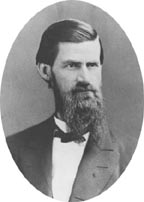
You talkin’ about me?: T.H.B. Odeneal (image credit: Levi Odeneal page)
The name spelled “Luck-a-ma-too” that’s attached to this letter is from Grand Ronde Indian Reservation. It would seem we might connect it with Luck-a-ma-foo / Luck-a-moo-foo / Antoine, a Che-lam-ela or Long Tom band 1st chief.
The date of 1872 is less than a generation into the Grand Ronde reservation’s existence (it was founded 1855-1856).
It’s addressed to someone we know well, Alfred B. Meacham, a Methodist minister and Native rights activist who had been appointed US Superintendent of Indian Affairs for Oregon in 1869. (Link to other Meacham stuff on my website.)
Now in 1872, Meacham was being replaced in that post by Thomas Benton Odeneal, a less knowledgeable man who also appointed a less qualified Indian Agent — all of which led up to southwest Oregon’s preventable Modoc War of 1872-1873.
[Odeneal, like a number of other Oregon settlers, was named after the much-admired senator Thomas Hart Benton, architect of the colonialist “Manifest Destiny” ideology and advocate for securing US title to the Oregon Territory.]
I don’t expect that any Grand Ronde elder in 1872 knew how to read & write. Many of the spellings we see in today’s letter were already the effective standard, that’s to say, they were common in the popular published Chinook Jargon dictionaries — which by definition only Settlers used. What I’m getting at is this:
Some Settler scribed this letter “for” Luck-a-ma-foo.
It’s interesting to consider whether this “for” was
- (A) dictation by the chief, or else
- (B) a non-Native person trying to put words into his mouth.
In the case of (B), sometimes we find Jargon texts that amount to Settlers trying to imitate an Indigenous person, and that’s something that happened for various purposes, from
- (1) giving a representative sample of what that person might say, to
- (2) mocking them in a racializing way.
But I’m inclined to analyze today’s letter as (A) — the genuine words of Luck-a-ma-foo, as taken down with good intentions by a literate non-Native.1
We have quite a number of other documents in Chinuk Wawa written down by Settlers at the request of various Pacific NW Indigenous people, usually leaders of tribal communities. And those documents are usually addressed to the colonizer government, be it in Ottawa or in Washington, DC.
An indication that this was a Settler doing the writing is in the several times that mesika (msayka) ‘you folks’ is mistakenly written where it’s obvious that nesika (nsayka) ‘we, us, our’ was meant. We also see mika (mayka) ‘your’ written once where nika (nayka) ‘my’ make far more sense. That M~N confusion in the pronouns is absolutely characteristic of non-Indigenous speakers, we’ve found over & over again.
Also typical of Settlers was the misuse of mesika (msayka) ‘you folks’ where mika (mayka) ‘you’ (one addressee) was intended, which we see in the last line of today’s letter.
As far as I can tell, the Chinuk Wawa that we find here is typical of Luck-a-ma-foo’s generation. This is not fake, nor bad Jargon.
- And I want you to understand that what we now know as Grand Ronde’s type of Chinuk Wawa did not yet exist. At least we’ve not found evidence of its existence.
The generation(s) of Grand Ronde rez-born kids who re-creolized Chinuk Wawa into the dialect we now learn to speak…had not yet shown up in the historical record. It’s hugely remarkable that we don’t find indications of their grammatical habits in material from G.R. before 1900. (And as far as I can recall at this moment, not before Melville Jacobs’s documentation of their speech in the 1920s and 1930s.)
Up to that time, the Jargon we find everywhere around Grand Ronde and the lower Columbia River had not undergone any major grammatical changes since the 1st creolization, circa 1825, that was associated with Fort Vancouver. That “early creolized” Chinuk Wawa is what you see in the earliest published vocabularies such as Horatio Hale 1846, George Gibbs 1863, and Demers-Blanchet-St Onge 1871.
So, if you are only familiar with modern Grand Ronde Chinuk Wawa, you might tend to react to Luck-a-ma-foo’s language as “that’s not GR CW”! (Just as Prof. Franz Boas, who was only used to early-creolized and Northern Dialect CW, reacted to GR CW with disbelief.)
You’d have lots & lots of reasons to think so:
- It’s true, this speaker doesn’t say munk,
- he doesn’t reduplicate verb roots,
- he doesn’t say na, ma, ya, łas, etc.
- And he does use the old-fashioned prefix hayas- for ‘very’ (which is pretty foreign to the southern dialect nowadays),
- he says spus for ‘if’,
- he says kʰupa to mean ‘with’ and ‘for’ (instead of kʰanumakwst & pus),
- his tilixam-s seems to reflect influence from the English noun plural,
- he doesn’t use “resumptive” pronouns yaka & łaska along with a noun subject,
- and so forth.
But indeed, Luck-a-ma-foo’s way of talking has definite Grand Ronde traits.
- For example, he only uses wik to negate sentences. (Not the older/northern dialect hilu.)
- And an indication of his own genuine local pronunciation seems to exist in the spelling conzea, apparently qʰə́ntsi, for what we now know as qʰə́nchi ‘how many’.
Note also that the newspaper gave no translation for this letter — expecting the Salem-area readers to understand its Jargon. Salem is mighty near the Jargon-speaking reservation of Grand Ronde, about 36 miles east of it.
Another point: it’s not unlikely that the recipient himself, Meacham, supplied (leaked!) this letter to the newspaper to publish. And by so doing, he may have been fulfilling Luck-a-ma-foo’s request to share this letter with the Great Chief in Washington. In 1872, that was the Chinuk Wawa-speaking President, Ulysses Grant.
Lastly, a reminder that Meacham was known as being very pro-Native. Today’s letter tends to corroborate that, with its repeated assertions that “we Natives love you”.
So I take the following as a quite possibly a legitimate document of Native sentiment expressed in Chinook Jargon.
I’m going to translate the much-repeated Jargon word tyee (tayi) here as ‘boss’, when it occurs unmodified. That’s not strictly accurate, but it reflects what I gather was the Native perception of government officials who dealt with them. When we find the phrase Siwash tyee (sawash tayi), I’ll translate it as ‘Indian Agent’. Hyas Tyee copa Washington will be ‘Great Chief in Washington’, i.e. the President of the USA.
Afterwards, you’ll find footnotes, many of them reflecting our December 7, 2023 Zoom group examination of this letter.
…To join in that weekly group, email me, s p o k a n e i v y @ g m a i l . c o m


Letter Written by an Indian Chief.
GRAND RONDE AGENCY,
Jan. 16, 1872.
MR. MEACHAM, SUP’T. INDIAN AF-
FAIRS .– Six: Nika tika hiyou wa-wa
síks: nayka tíki háyú wáwa2
‘Friend: I want to talk a good bit’
copa mika; nika hyas sick tum-tum,
kʰupa mayka; nayka hayas-sík-tə́mtəm,
‘to you; I’m very sad,’
co-qua con-a-way til-licums. Ni-wit-
kákwa kʰánawi tílixam-s(,) nawítka,
‘as are all of the people, in fact’
ka, conaway siwash copa okoke illahe.
kʰánawi sáwásh kʰupa úkuk ílihi.
‘all of the Natives at this place.’
Nika cumtux mika copet mammook
nayka kə́mtəks mayka kʰəpít-mámuk
‘I understand you’re no longer working’
copa siwash. O-koke wake close Mr.
kʰupa sáwásh. úkuk wík-łúsh, místa*
‘with the Natives. This is bad, Mr.’
Meacham. Mox cold ilahe mika
míchəm*. mákwst kʰúl-ílihi mayka
‘Meacham. For 2 winters (years) you’
charco copa ocoke illahe, mika hyu
cháku kʰupa úkuk ílihi, mayka háyú
‘came to this place, you did a great deal of’
wa-wa copa mesika [SIC],3 hyas close wa-wa
wáwa kʰupa nsayka, hayas-łúsh wáwa(.)
‘talking with us, excellent conversations.’
conaway til-licums is-cum skoo-kum
kʰánawi tílixam-s ískam skúkum
‘Everyone took encourage-‘
tum-tum4 o-coke sun nika til-licums
tə́mtəm(;) úkuk sán nayka tílixam-s
‘ment(;) today my people’
halo tum-tum; spose mika copet si-
hílu tə́mtəm; spus mayka kʰəpít-sáwásh-
‘have lost heart; if you quit5 being the Indian’
wash Tyee, con-a-way siwash kil-a-pie
táyí,6 kʰánawi sáwásh k’ílapay
‘Agent, all of the Natives will go back to’
co-qua me-sah-chie Indian. Spose
kákwa másáchi índjən*. spus
‘being like hostile Indians. If’
Hyas Tyee copa Washington potlach
háyás táyí kʰupa wáshintən* pá(t)lach
‘the Great Chief at Washington (DC) gives’
chee Tyee copa mesika, mesika wake
chxí táyí kʰupa nsayka, nsayka wík
‘a new boss to us, we won’t’
cum-tux conzea sun o-coke Tyee mit-
kə́mtəks qʰə́ntsi* sán úkuk táyí míłayt.
‘know how many days that boss will stay.’
lite. Nika tillicums wake tickey co-
nayka tílixam-s wík tíki kákwa,7
‘My people don’t want things that way,’
qua, wake tickey chee Tyee. Chee
wík tíki chxí táyí. chxí
‘don’t want a new boss. It’s a new’
Tyee kwa-ne-sum.8 Tagh-ham moon
táyí kwánisim(;) táx̣am mún
‘boss all the time, six months’
kimp-ta, pe klone Tyee mitlite copa
kʰimt’á, pi łún táyí míłayt kʰupa
‘later, and there have been three bosses at’
o-cook illahe. O-cook wake close copa
úkuk ílihi. úkuk wík-łúsh kʰupa
‘this place. That’s bad for’
siwash — wake close. Spose hyas close
sáwásh — wík-łúsh. spus hayas-łúsh
‘the Native people — it’s bad. If a perfectly good’
Tyee — coqua mika — charco, conoway
táyí — kákwa mayka — cháku, kʰánawi
‘boss — like yourself — comes, (and) all of’
siwash potlach tum-tum copa [yaka]*,9 o-cook
sáwásh pá(t)lach tə́mtəm kʰupa* [yaka]*, úkuk
‘the Natives give (their) hearts to [him], (and) that one’
mit-lite ict moon, copet, o-cook wake
míłayt íxt mún, kʰəpít, úkuk wík-
‘stays one month only, (then) that’s a’
close; spose mika copet, Hyas Tyee
łúsh; spus mayka kʰəpít, háyás táyí
‘bad thing; if you’re quitting, the Great Chief’
copa Washington potlach nika chee
kʰupa wáshintən* pá(t)lach nayka chxí
‘in Washington will send me a new’
Tyee, nika wake cumtux o-cook man.
táyí, nayka wík kə́mtəks úkuk mán.
‘boss, (and) I won’t know that man.’
Spose hy-as close man, siwash wake
spus hayas-łúsh mán, sáwásh wík
‘If it’s a really decent man, the Natives won’t’
cum-tux con-zea sun o-cook Tyee mit-
kə́mtəks qʰə́ntsi* sán úkuk táyí míłayt
‘know how many days that boss will stay.’
lite. O-cook hyas cultus. Conaway
úkuk hayas-kʰə́ltəs. kʰánawi
‘That’s totally ridiculous. All of the’
siwash hyas tickey mika, spose mika
sáwásh hayas-tíki mayka, spus mayka
‘Native people love you; if you’
mit-lite Tyee, hyas close, conoway
míłayt táyí, hayas-łúsh, kʰánawi
‘remain here being boss, it’s very good, all of the’
siwash iscum hyas skoo-kum tum-tum.
sáwásh ískam hayas-skúkum tə́mtəm.
‘Natives will really take heart.’
Mr. Dyar,10 Tyee copa o-cook illahe,
místa* dáya*, táyí kʰupa úkuk ílihi,
‘Mr. Dyar, the boss at this place,’
conaway siwash hyas tickey, wake
kʰánawi sáwásh hayas-tíki, wík
‘all of the Natives love, (and) don’t’
tickey chee Tyee, mika cumtux, si-
tíki chxí táyí, mayka kə́mtəks, sáwásh
‘want a new boss; you know the Native people’
wash wake tickey chee Tyee konawa
wík tíki chxí táyí kʰánawi
‘don’t want a new boss every’
moon, wake.
mún, wík.
‘month, not at all.’
Spose mika potlach o-cook chum*11 copa
spus mayka pá(t)lach úkuk t’sə́m*12 kʰupa
‘If you’ll give this writing* to’
Hyas Tyee copa Washington, close,
háyás táyí kʰupa wáshintən*, łúsh
‘the Great Chief at Washington,’
mika tum-tum.
nayka* tə́mtəm.
‘my heart will be happy.’
Nika copet mam-ook, nika wa-wa
nayka kʰəpít-mámuk nayka wáwa.
‘I’m done making my speech(.)‘
ka-kwa nika hyas tickey mika, cum-
kákwa nayka hayas-tíki mayka, kə́mteks?
‘This is how (much) I value you; have you understood?’
tux? Cona-way siwash hyas tickey
kʰánawi sáwásh háyás tíki
‘All of the Native people very much like’
mika, wake tickey chee Tyee. Close.
mayka, wík tíki chxí táyí. łúsh.
‘you, (and) don’t want a new boss. All right.’
Mesika close six,
msayka13 łúsh síks,
‘You people’s good friend,’
LUCK-A-MA-TOO
— from the Salem (OR) Oregon Weekly Statesman of January 24, 1872, page 2, column 7
qʰata mayka təmtəm?
What do you think?
1 In the Discord “Chinuk Wawa” server & in a personal email on 12/06/2023, Dr. Henry Zenk expressed doubts about this letter’s connection with the known person Luck-a-ma-foo / “Antoine”, citing a number of reasons including (A) that there’s no known mention of that leader after the 1856 census, (B) that the Long Tom or chalámali band isn’t known to have retained a separate identity as late as 1872, and (C) that the Jargon here seems like what “we usually associate with English speakers.”
On that last note, I have to point to several other 19th-century Grand Ronde texts we’ve seen, all of them very similar in grammar to today’s reading:
2 Hayu wawa: possibly this phrase is an early indication of the development of Grand Ronde CW’s hayu- “Continuing Action” prefix. In that case we could read hayu-wawa, “to be talking”. I find that view less compelling than a literal reading as “talk a lot”.
3 Juli in our Zoom session on 12/7/2023 hypothesized that the occurrences of < mesika > (literally ‘you folks’) could be due to a Settler scribe reading the Jargon text back to the Indigenous author, dutifully changing an original < nesika > (‘we’). What do you think?
4 Iskam skukum təmtəm (literally ‘(purposely) take a strong heart’) is not a commonly known expression. The Northern Dialect equivalent would be t’łap-skukum-təmtəm, ‘wind up being strong-hearted’, but that t’łap- formation was not really known in the Southern Dialect/at Grand Ronde. All things being equal, I believe iskam skukum təmtəm is accurate Jargon for its time and place.
5 Credit to Henry Zenk in our 12/7/2023 session for the translation ‘quit’ for kʰəpit.
6 A number of us in the 12/7/2023 Zoom session felt somehow skeptical of the expression kʰəpit-sawash-tayi for ‘quit/stop being Indian Agent’. But we didn’t seem to come up with a better alternative expression, other than a circumlocution such as pus hilu sawash tayi mayka, “if you’re not the Indian Agent”. In Jargon it is difficult to directly express what in English are a helping verb + an equative be-verb, such as “quit being Agent”, “want to be Agent”, “go back to being Agent”, and so on. This same problem applies to the following phrase, k’ilapay kakwa mashachi índjən*.
7 …wik tiki kakwa received some critical commentary in our 12/7/2023 session. If kakwa is meant in its most frequent sense, as the verb ‘to be that way’, a more clear phrasing would be …wik tiki pus kakwa, ‘…dont’ want for it to be that way’. However, it’s possible that kakwa here is to be taken as a noun ‘such a thing’; in that case, the grammar would be unquestionably all right.
8 Chee tyee kwa-ne-sum got a lot of discussion in our 12/7/2023 Zoom session. It can be taken literally, as ‘It’s a new boss all the time.’ The sense is fairly clearly ‘There’s a new boss all the time’, an expression which we might expect to start with the Jargon verb miłayt ‘there is; there exists’. In a number of fluent speakers’ usage, though, we have found that miłayt can sometimes be left out.
9 It appears possibly yaka ‘him’ was left out by accident. This is exactly the kind of omission that we often find in spontaneously written (speechlike) Jargon texts.
10 Leroy S. Dyar was apparently appointed Commissary in Charge for Grand Ronde in early 1872. (Click this link.) Then he was appointed Indian Agent for Klamath Agency that summer. (Click this other link that doesn’t look like a link.) This, and the fact that tayi A.B. Meacham was a Superintendent, goes to show that tayi(literally ‘chief’) in Jargon meant any of several government positions.
11 Chum*: this word is blurred on the page, and it’s unclear what is printed there.
12 T’səm ‘written; mark’ etc. can also be a noun ‘writing; letter’ etc. This is an extremely frequent usage in the Northern Dialect, at least.
13 The use of msayka (literally ‘you folks’) rather than mayka is unexpected in a letter addressed to one single person. It’s a typical error by English-speaking Settlers. I have doubts that a fluent Indigenous speaker would use the plural pronoun here all of a sudden.

Dave and all, one final “tubʰits” of my own on this text. Back at Zenk Archives Central (old family house where my filing cabinets full of yellowing paper are) I went and checked the Grand Ronde census docs that I have. A particularly important one is a handwritten family census ca. 1872 (inferred date confirmed by ages given for individuals known later, e.g. Louis Kenoyer age 4, Victoire Wishikin [Victoria Howard] age 6). In this census (unlike others) names are listed by families grouped by tribe. Kalapuyan identified tribes on this census are: Wapato Lake (Tualain), Yamhill, Luckiamute, Santiam, Marys River, “Calapooia” (southern Willamette Valley and south, including individuals elsewhere identified as Yoncallas). No Long Tom (under any known synonym), also no name that looks anything like “Luck-a-ma-Foo” (as the name is spelled in treaty). So that name appearing as the source of this text is still a head-scratcher, and considering the perhaps political (or could it even be humorous? like some settler practical joke? I don’t know!) I would still have to consider pretty suspicious. I would also take some issue with your statement that all of the texts you list are “very similar in grammar.” I think that the “1880 schoolkids” letter in particular deserves another look. While I agree with David Lewis that this letter was most likely written by the priest at Grand Ronde, Fr. Croquet, not the parishioners and schoolkids whose names appear as signers, there is vocabulary-idiom content there that we don’t expect to see in typical contemporary settler-Jargon (granting that “Fr Crockett” was a natal French speaker and French influence can be seen in some of the spellings and no doubt word orders as well). Fr Croquet used the language daily during the 38 years he was at GR, so I think that this particular text can be accepted as a genuine reflection of the language as used in the contemporary GR community. I am not so sure about the letter from “Luck-a-ma-foo”! Well, ukuk nayka tʰubits. alta kʰəpit-kakwa.
LikeLiked by 1 person