Kamloops + other residential schools, as reported to Native people in Chinook (Part 8: the kids build Williams Lake school)
Here’s an interesting report in Chinuk Wawa on the first days of the residential school at Williams Lake in central British Columbia.
It comes from Kamloops Wawa August 1895, #131, page 119.
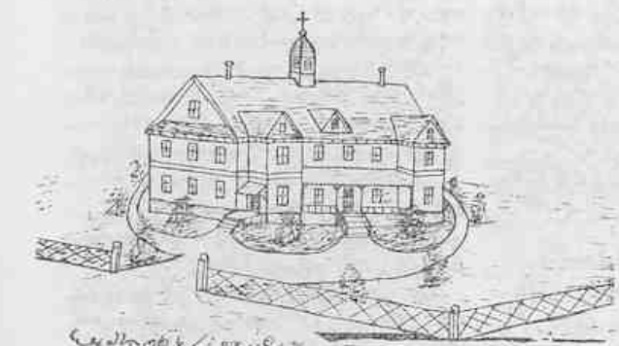
What’s really notable about today’s clipping is that is comes with a hand-drawn picture (above) of the school, and that it describes to Indigenous people what the schoolkids’ day is like as they literally build the school that they attend.
Here’s how it looks, in the Chinuk Pipa alphabet:

And here’s what that means, in English, with some useful details:
Msaika nanich ukuk piktyur: aias haws iaka
‘You folks can see this picture: a large building’tsim kopa ukuk piktyur: klaska tiki mamuk kakwa haws
‘is drawn in this picture: the intention is to build a building like this’alta kopa Sin Shosip Mishon, Wiams Lik, pi pus
‘now at St. Joseph Mission, Williams Lake, and when’msaika nanich ukuk pipa, klunas wik saia kopit
‘you’re seeing his newspaper, it might be just about done,’ukuk skul haws.
‘this building.’Lili* iaka tsim ukuk Shugir Kin Tintin pipa kopa March <6>*
‘This Sugarcane Bell [newspaper] has been (already) written for a long time; on March 6′iaka tsim ukuk pipa, pi iaka wawa:
‘it was written, this paper, and it says:’Kanawi tanas man kopa skul klaska tlus tomtom.
‘All of the schoolboys are in good spirits.’Klaska ayu mamuk pus chako tlus ilihi kah alki iaka
‘They’re doing a lot of work so it will be improved, the place where there’s going to’mituit ukuk haws, kanawi son, pus kopit makmak
‘stand this building; every day after’sitkom son, klaska kuli mamuk: iht iskom lapil,
‘lunch, they head out to work: one picks up a a shovel,’iht iskom lapiosh, iht iskom hwil baro, hloima
‘another takes a pickaxe, another gets a wheelbarrow, others’iskom han baro, ItS, pi klaska skukum mamuk pi
‘take a hand barrow, etc., and they work hard until’chako skul taim
‘school time comes.’<24> ukuk tanas man kopa skul; <19> sawash,
‘There are 24 of these schoolboys at the school; 19 are Native,’<3> tkop tanas man, pi <2> sitkom sawash.
‘3 are White boys, and 2 are Métis.’
