Ikta Dale McCreery yaka t’ɬap (Part 4: Three against the Wilderness)
My friend and colleague Dale McCreery shared some thoughts about a classic of BC literature…
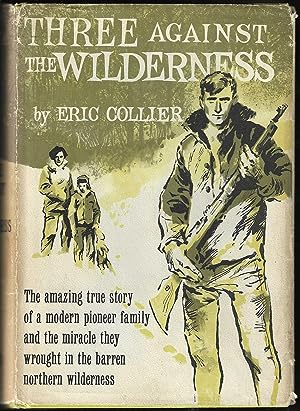
I have this edition; there are many others (image credit: AbeBooks)
This was on the big Facebook “Chinook Jargon” group. Dale wrote [and I’ll interject my comments]:
Just read through the book “Three Against the Wilderness” [by Eric Collier, 1903-1966] and noticed a lot of conversations that I suspect represent CJ. Chief amongst my reasons is the constant use of “stop” in a way I really don’t understand. here are all the examples – could someone explain “stop” to me?”
-
- “No damn fur stop.”
- “inside this line my trapping country stop. Damn little fur stop here now”
- “pretty soon so many stop my trapline . . . “
- “you smoke?” – “spose tobacco stop.”
- “no tobacco stop now”
- “the big deer white man call elk me kill lots of long, long tam’ ago, before white man come this country. This one, he no that kind meat. Lots more deer stop this country then all same lots that kind stop now.
[Dave writing here: I point this stop out in my dissertation, as a newly discovered unique trait of Northern Dialect Chinuk Wawa, synonymous with miɬayt.]
I hear this one as well – more better – and it’s also used as a phrase in Nuxalk – is “more” or “mooa” a CJ expression? I’m really thinking it was used in CJ in this country based on it’s use in Nuxalk…
-
- “more better you get out of sleigh and eat”
- “more better you go ahead and I follow behind”
[Dave again: This also has parallels in BC Chinook Jargon, where there are some documented instances of the English loan mo(r) in use. But I think it’s relevant to consider that pidginized English was somewhat of an entity of its own in “bush” areas of the province. Consider the Chinese Pidgin English-sounding all same in the following quotation by Dale from the same book…]
“I’m crazy all same loon. spose me not crazy, me and my woman and my kid never get out of cabin till spring come back again.”
And a name – “tenasstyee” –
[Dave here — this is of course Chinuk Wawa tənəs-táyí, literally ‘little chief’, commonly used in the province to mean a relatively minor chief.]
Before my eyes go mamaluse me kill more that kind of deer than leaf stop tree in springtime.”
[Dave again — this is Jargon míməlus ‘dead’ in its common Northern Dialect pronunciation.]
And here’s what I think is a CJ expression in English “Say, that’s a lulu of a mink you’ve caught yourself.”
[Dave coming in to say I doubt that. I think “lulu” became English-language slang independent of the Jargon.]
And here’s one more of what I see as a CJ influence on English –
“isn’t it ever going to come spring?”
[Dave once more — this phrasing is probably much older in English than the age of the Jargon.]
