Culture lessons: Things Chinuk Wawa doesn’t do (Part 4: mamook’ing)
Contrary to popular belief (among some Settlers and recent learners), you don’t need to put “mamook” before every verb!
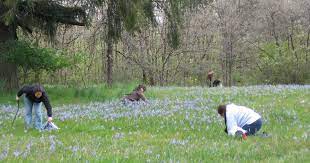
munk-lakamas (image credit: nativeTEACH)
Chinuk Wawa does not use mamuk- as a marker of verbs.
Some languages do things like that, but you don’t need to be bothered with that information 🙄
We all know that lots of Jargon verbs do use munk- / mamuk- (the version depends on your dialect).
So, why don’t other verbs have “mamook” on them?
And, what is “mamook” doing, when it is used?
I’ll start off from a particular example of a totally Settler way of talking: “mamook wawa” — intended as ‘talk; tell a story’ and so forth.
One problem is that the “mamook” there isn’t adding anything. It doesn’t change the meaning of wawa, which already is ‘talk; tell a story’ and so forth!
So that’s an ungrammatical phrase.
Because munk- / mamuk- is a grammatical prefix.
My first go at analyzing this prefix, in my 2012 dissertation (read it for free at this link!), was to use “shock quotes” & call it a “causative” marker. So if you say “mamook wawa”, you should expect to be understood as expressing ’cause to talk, force to talk, have someone talk for you’, and so on.
In 2012, I used my words, and recognized that the effect of adding mamuk- / munk- isn’t always the same as what we linguists habitually think of as causative.
A simple & effective example is, Chinook Jargon’s love for expressing the harvesting of a natural resource as munk- / mamuk- + the “noun” for that product:
- munk-lakamas (‘camas-digging’)
- mamuk-samən (‘salmon-fishing’)
- mamook-stick (‘logging’)
- and even munk-tatis (‘gardening’)
The munk- (etc.) in these expressions doesn’t mean ‘to cause camas’, ‘to cause salmon’, or ‘to cause timber’, etc. Not in any way that we straightforwardly connect with ‘causing’.
My newer view of mamuk- / munk- takes this into account.
Nowadays, I analyze this prefix as a reflection of Chinuk Wawa’s “Active-Stative alignment”.
In this language, every verb is either Stative (denoting a state of being), or Active (signifying a state of doing). And that division is made according to the Indigenous heritage of CW, so for example ‘feeling’ an emotion is Stative — a biy of a difference from the Métis French and English ancestors of the Jargon.
Every noun in Chinook Jargon is (also) a Stative verb, so lakamas ‘camas’ can also be a predicate ‘to be camas’. Samən also = ‘to be salmon’. Stik also = ‘to be a tree / wood / stick’.
The Jargon’s prefix mamuk- / munk- acts very similarly to your standard linguistic idea of a causative,
…a valency-increasing operation that indicates that a subject either causes someone or something else to do or be something, or causes a change in state of a non-volitional event. Normally, it brings in a new argument (the causer), A [for “agent”], into a transitive clause, with the original subject S becoming the object O.
So a semantically more verby (i.e. Active) Jargon verb like cháku, ‘it’s growing’, gets causativized in the way predicted by that definition — (yaka) munk-cháku (Ø) is ‘(she) grew (it)’. The idea is, she made it grow.
And a semantically adjective-like Stative verb like t’ɬə́mən, ‘it’s powdery/mushy’, gets causativized in the same predictable way — (yaka) munk-t’ɬə́mən (Ø) is ‘(she) smashed (it)’. (The idea being, she made it be powdery/mushy.)
But those semantically nounier Stative verbs like lakamas, ‘they’re camas bulbs’? When we causativize them, we have (yaka) munk-lákamás (Ø), which is not *(she) made it be camas*. Instead it means ‘(she) harvested camas’.
Real-world considerations come in here, don’t they? Who would ever say, in their real life experiences 100 or 200 years ago in the peak days of Chinuk Wawa, ‘make it be camas ~ turn it into camas ~ transform it into camas’? I admit, there are a few expressions parallel to that in ancient traditional stories, where folks got turned to stone etc. And you would indeed express those with this same grammatical structure: munk-stún.
(If you go read those stories in the tribal languages, though, I think you’ll find that people “become stone” instead, which backs up my point! There’s lots of productive grammar affixation in those languages for ‘becoming’.)
But camas is already camas, and you can’t make some other thing be camas! Same with stones, in our normal experience of life.
I’m willing to bet that the vast majority of our planet’s 7000 languages don’t freely allow that literal causativizing of nouns — outside of such clearly fanciful (and, via storytelling, strongly conventionalized) ideas. (‘Turn it into a cooked meal’ is of course quite another idea, hardly fanciful at all.)
Plus, I doubt that ‘gathering stones’ was quite so culturally conventionalized an activity as the harvesting of resources for food, fuel, and artifacts in ancient Indigenous Pacific NW cultures, or in Chinuk Wawa-speaking culture. So munk-stún wouldn’t likely be taken as ‘turn it to stone’ (make it become stone).
In the tribal languages such as SW Washington (Tsamosan) Salish, the verbs that translate ‘gathering/harvesting’ things only seem to involve the words for plants and animals that you’d eat, and plant products that you’d burn or for example weave or make tools from. Not rocks, nor dirt, nor water, to name the more elemental substances in the environment.
I want to bring this back around to linguistic ideas, however. I’m not just talking about metaphors.
In other words, I think there’s a scientific linguistic explanation for these seemingly oddball causative + noun expressions that are actually pretty frequent in Chinuk Wawa. I think the element of causation in munk- / mamuk- + ‘camas’ is as follows:
The causative prefix does introduce, as expected, an additional actor to the predicate ‘to be camas’. Because it culturally makes no sense to think or speak of ‘causing it to be camas’, the actor is assigned instead to the next most relevant role with relation to this natural resource — the person who harvests camas.
With this understanding that munk- / mamuk- + (semantic) noun = a normal causative, we now have a unified theory of how this prefix works.
So we don’t have go to any lengths like carving out an exception for such examples. We don’t have to say munk- is causative “except” with nouns, which would be clunky.
Bonus fact:
Sometimes, the gathering of certain natural resources doesn’t seem to be encoded in Chinook Jargon as mamuk- / munk- plus the noun for that thing.
Instead, we’ve seen people munk-ískam / mamuk-ískam (causative-pick.up) things like seabirds.
That’s a verb for ‘collecting’ things.
This is not an exception to the rules we’ve just been talking about. On the one hand, ‘collecting’ rather than harvesting implies that it’s not something you habitually do for your livelihood. The person who was mamuk-iskam‘ing seabirds from their burrows on an offshore rock was doing it for a visiting biologist.
And on the other hand, mamuk-iskam is indeed just another instance of a ‘harvesting’-type causative. It doesn’t mean ‘make someone pick things up’, but it sure does mean ‘be the person actively involved in picking things up’!
