1901, Similkameen, BC: Princess Julia memloos
The Chinook Jargon in the post-frontier article from southern interior BC didn’t need to be translated to be understood.
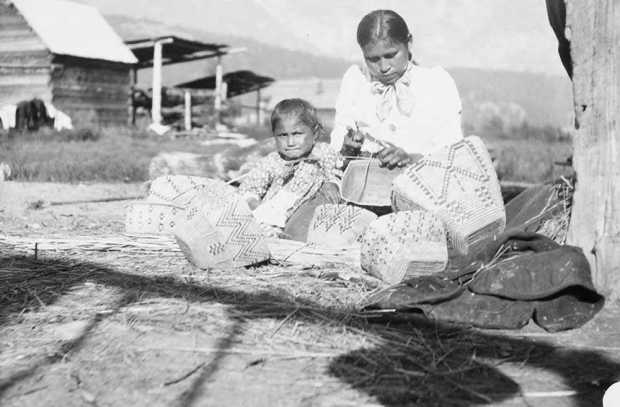 Similkameen people (image credit: SimilkameenValley.com)
The spellings used are of interest!
Memloos ‘dead’ & ta’ye ‘chief’ (& Moye’s ‘Moïse’, the French version of ‘Moses’) look like the ways Father Le Jeune of Kamloops tended to write the language, and the writer may have had in hand one of Le Jeune’s 1890s pamphlets.
Compare Grand Ronde-style modern spellings, míməlus, táyí (and *moyís).
Mimaloose illahee is more standard English-speaking Settler spelling. Compare modern-style míməlus-ìlihi ‘cemetery’, literally ‘dead people-place’.
This report is about the Similkameen part of the northern Syilx (“Okanagan”) Salish people.

PRINCESS JULIA MEMLOOS.
Princess Julia, the last hereditary scion
of the Similkameen Indians. crossed the
Stygian Ferry Sunday evening, after a
protracted illness of several weeks dura-
tion. Julia was barely 30 years of age,
and well known throughout the valley.
She was the only daughter of Ta’ye
Moye’s, the late Chieftain of the Similka-
meen tribe. Though she leaves a young
son, it is doubtful if he will ever be elect-
ed head of the tribe. As befitting her
rank the funeral ceremonies were elabor-
ate. Her body was laid in a casket cov-
ered with white satin cloth, which was
placed under a tent at the Catholic mis-
sion. Here it remained all Monday and
up till Tuesday afternoon. The members
of her tribe meanwhile brought potlatch,
which was piled around the coffin. Short-
ly after two o’clock a procession was
formed, which marched to the Indian
burial ground on the east side of the
mouth of 20-Mile Creek. The body was
interred in the fenced off plot in which
Julia’s ancestors were buried. The cere-
mony concluded, the Indians left the
mimaloose illahee, and returned to the
mission to enjoy the potlatch as is their
custom.
— from the Princeton (BC) Similkameen Star of September 7, 1901, page 1, column 2
