1851: “Klah high ijurn”
Here we find some of the earliest published Chinuk Wawa, and it’s from the Grand Ronde area.
This is In a publication that I doubt researchers have ever looked at,
Datelined Tualatin, O.T. (Oregon Territory), August 27, 1851, this published letter from a newly arrived immigrant teacher showed up way back in New York state.
It’s signed only “M.”, so there’s more research to be done to figure out who this writer was.
The Chinook Jargon in the letter is limited, and misspelled by the typesetters to whom it was gibberish, but it’s valuable for being such early on-the-spot information:
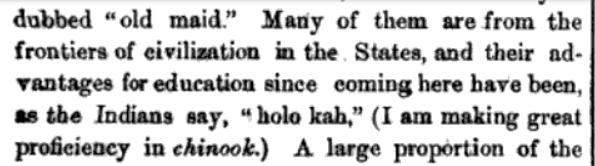
Page 127, discussing adolescent female Settlers:
Many of them are from the
frontiers of civilization in the States, and their ad-
vantages for education since coming here have been,
as the Indians say, “holo kah,” (I am making great
proficiency in chinook.)
Holo kah
= halo kah
= hílu-qʰá
= ‘nowhere’ in older Chinuk Wawa
And page 128, signing off in an apparent jocular reference to how tired he is:

“Klah high ijurn,” nike mameluse. M.
“Klah high ijurn,” nike mameluse
= “Klahighyum,” nika mameluse
= “łax̣áyam,” nayka míməlus
= ‘goodbye, I’m dead’.
I can recommend clicking this link to read the entire letter! It’s short, but immensely vivid. For instance, it analyzes the biggest social problem in Oregon Territory as being the divide between “city” and “country” people. This in turn means Yankees with their idealistic energy vs. Missourians with their suspicious Southern minds, we’re told!
— from the District School Journal of Education of the State of New-York XII:VII (126-128), December 1851
